
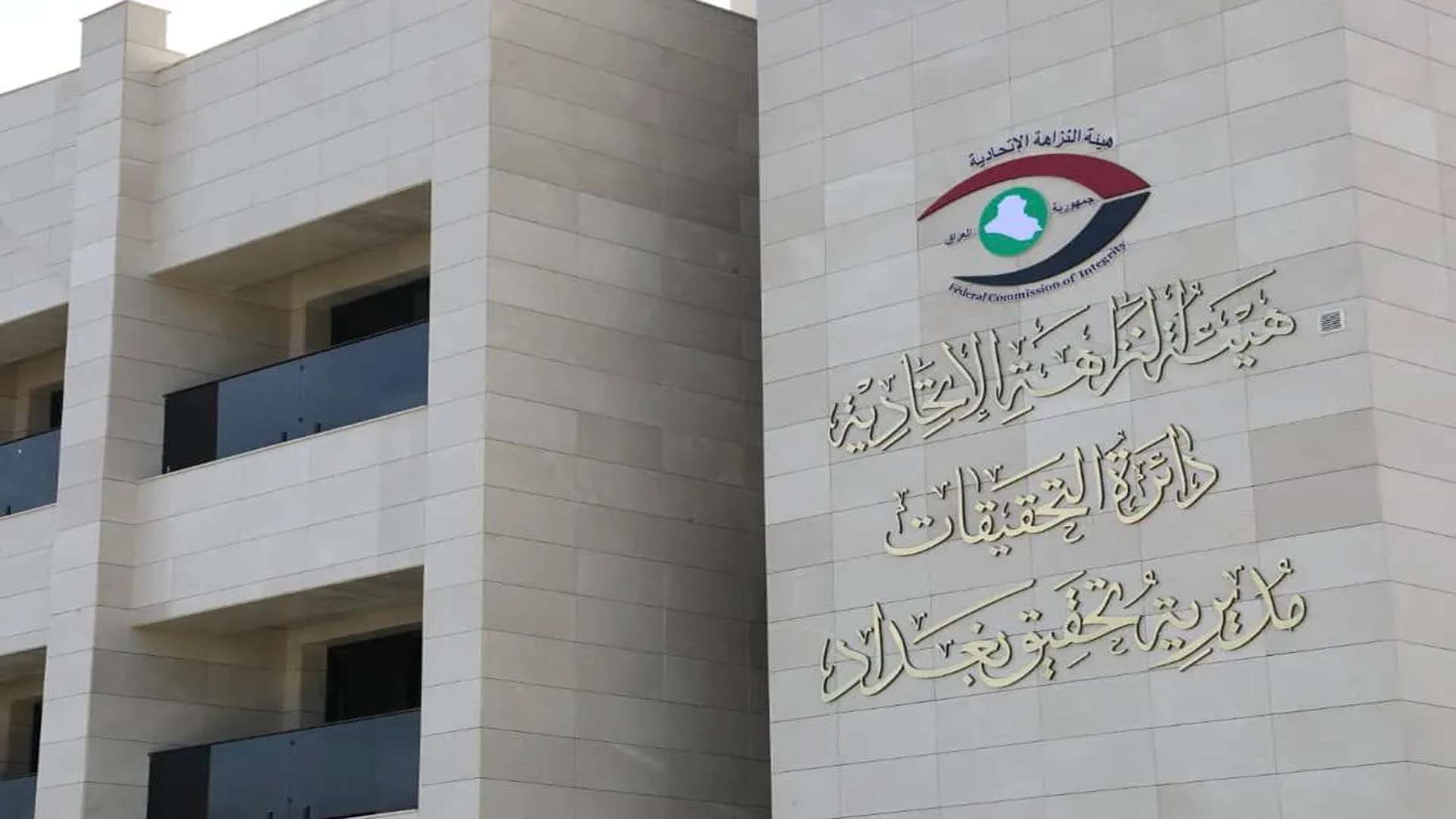
The headquarters of the Federal Commission of Integrity in Iraq.
Baghdad (IraqiNews.com) – The Federal Integrity Commission of Iraq officially disclosed on Saturday, July 11, 2026, that several foreign sovereign states continue to actively resist bilateral cooperation regarding the extradition of high-profile fugitives and the repatriation of stolen public assets.
According to an official administrative statement delivered by the Director General of the Commission’s Recovery Department ”who concurrently serves as the Vice Chairman of the Board of Directors for the Iraq Asset Recovery Fund” Abbas Mutaib, these foreign governments frequently leverage their own internal legislative frameworks, economic interests, or humanitarian asylum provisions to bypass international asset recovery requests.
Providing a detailed statutory briefing to the Iraqi News Agency, Mutaib explained that the Recovery Department has strategically engineered a series of comprehensive draft memoranda of understanding to introduce flexible, alternative legal negotiations with non-compliant jurisdictions.
The anti-corruption official noted that while some partner nations maintain high levels of operational transparency, other states maintain rigid domestic laws that systematically block the execution of judicial warrants issued by Baghdad.
In many complex files, corrupt figures have successfully secured formal refugee or political asylum status abroad, creating immense legal friction that complicates standard international extradition and asset liquidation protocols.
International Asset Recovery Bottlenecks
This strategic diplomatic push matches the aggressive anti-corruption directives implemented by the administration of Prime Minister Ali Falih al-Zaidi, which has prioritized tracing public funds across both domestic and offshore networks.
The institutional urgency surrounding these foreign recovery operations has escalated significantly following the critical confessions of the detained Deputy Minister of Oil for Refining Affairs, Adnan Al-Jumaili, whose ongoing interrogation has exposed a complex network of active members of parliament, political brokers, and elite bureau chiefs involved in systemic state-level embezzlement.
To bypass these international bottlenecks, the Federal Integrity Commission recently signed a milestone operational agreement with the National Central Bureau of Interpol in Baghdad, granting federal investigators direct, unhindered access to the global Interpol information ecosystem to dynamically monitor, track, and freeze the global assets of fleeing officials.