
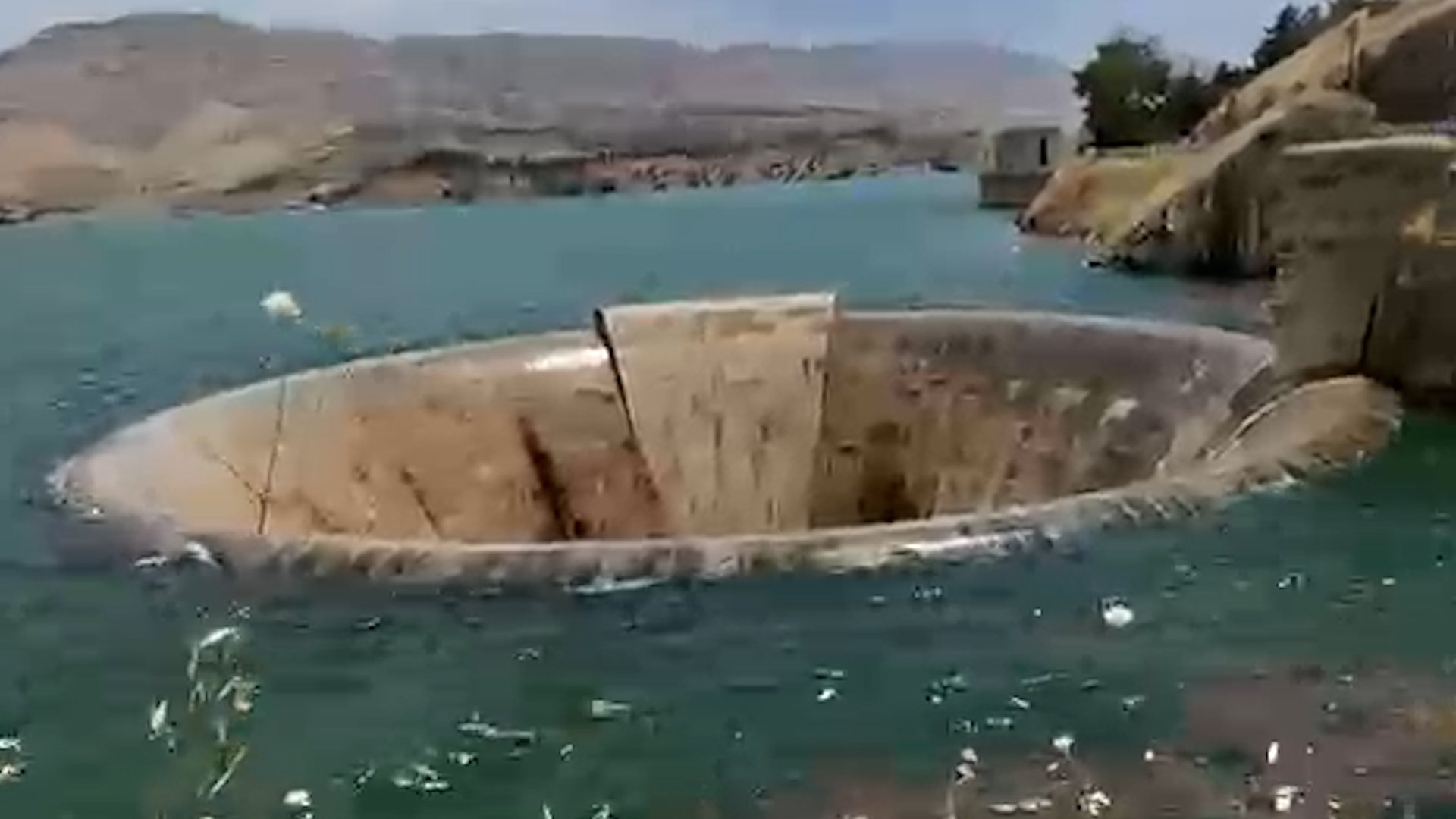
Baghdad (IraqiNews.com) – The Minister of Water Resources, Muthanna Al-Tamimi, announced on Sunday, July 12, 2026, a substantial recovery in Iraq’s strategic water reserves, confirming that the national volumetric storage has surged to 34 billion cubic meters.
This significant hydrological rebound marks a vital turning point for the country’s agricultural safety net, considering that at the tail end of 2025 and the start of 2026, Iraq’s water reserves had plummeted to a historic low of just 5 billion cubic meters, the lowest recorded level since 1933. Al-Tamimi attributed this vital recovery directly to an abundance of seasonal rainfall, though he issued a stark warning that sustainable management remains non-negotiable to support the upcoming agricultural cycle.
Despite the positive trajectory, Minister Al-Tamimi clarified that the current storage level is still less than half of what the country possessed in 2021, when strategic reserves peaked at 60 billion cubic meters.
In a detailed briefing delivered to the Iraqi News Agency and monitored by the 964 Network, the Minister called for strict, cross-provincial cooperation to protect these hard-won reserves. He emphasized that the Ministry is actively monitoring the deployment of the joint national agricultural plan through field inspections across various governorates, coordinating directly with local administrative heads, provincial councils, and parliamentary representatives to resolve distribution bottlenecks and enforce legally mandated water quotas.
Strategic Hydrological Outlook & Planning
The current seasonal framework was drafted following extensive coordination sessions between the technical leadership of both the Ministry of Water Resources and the Ministry of Agriculture.
Al-Tamimi noted that because Iraqi farmers have been completely deprived of multiple summer cultivation seasons due to multi-year droughts, the federal government is determined to guarantee a high yield of domestic strategic crops to stabilize agrarian livelihoods.
However, the Minister stressed that long-term survival under climate change ”where Iraq ranks among the most vulnerable nations globally”requires a complete structural overhaul of its outdated, primitive distribution networks.
Upstream source countries continue to demand that Baghdad implement a modernized, efficient water use policy before negotiating transboundary river flows. To address these external pressures and domestic shortages, the Al-Zaidi administration is treating the water crisis as a critical security issue, on par with national electricity generation.
Al-Tamimi concluded by stating that the Ministry’s long-term master plan focuses on transitioning away from traditional, wasteful surface irrigation channels toward modern closed-pipe transit networks and pressurized drip systems, urging the farming community to immediately adopt water-saving technologies to preserve the country’s fluid assets.