
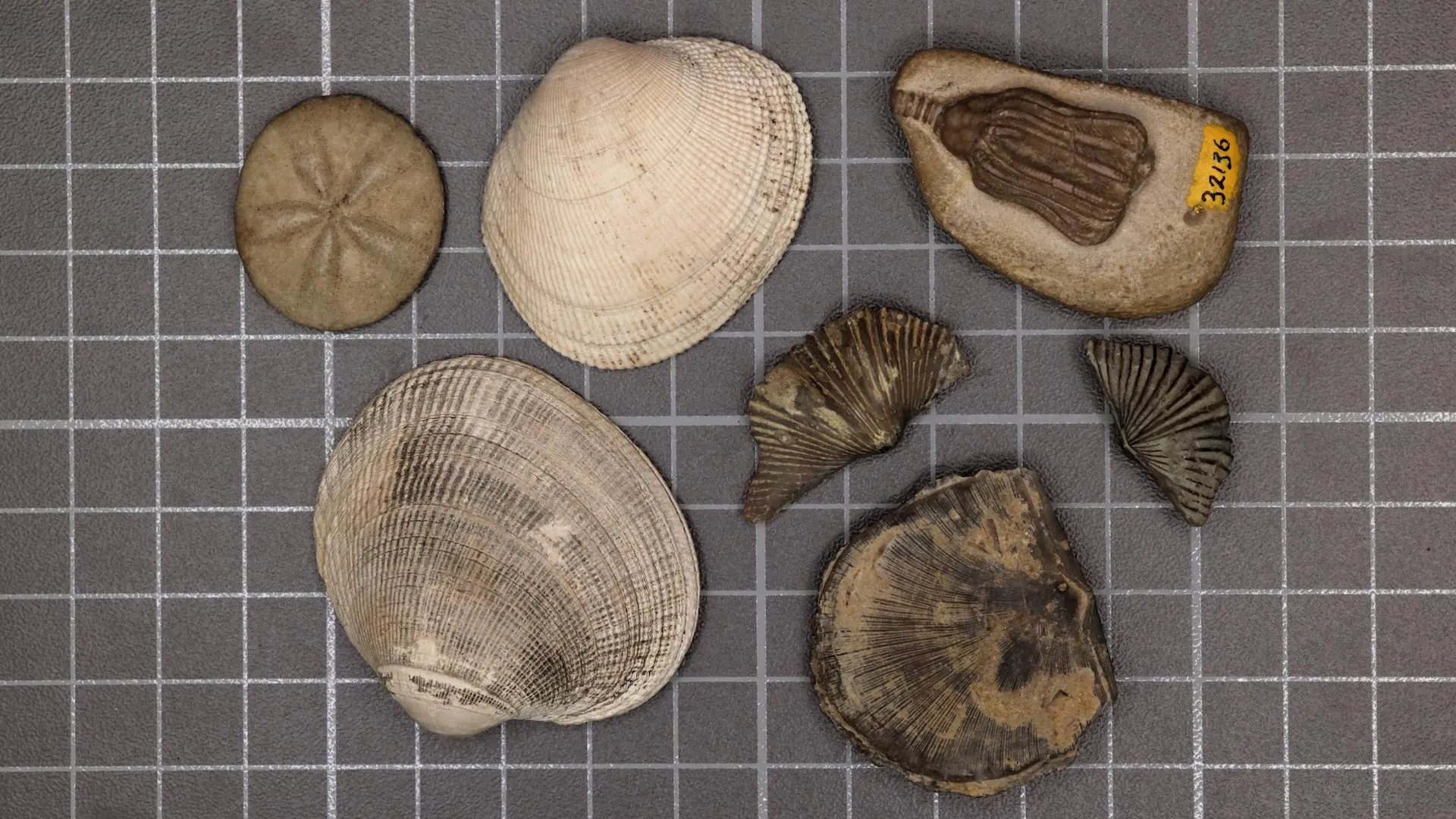
A new Stanford led study has provided the strongest evidence yet for why some marine animals survived Earth's largest mass extinction while many others disappeared forever. The findings not only explain how modern ocean ecosystems came to be, but also offer a cautionary glimpse of how today's warming oceans could affect marine life.
Roughly 252 million years ago, the Permian-Triassic extinction event, often called the "Great Dying," wiped out about 96% of marine species and 70% of land animals. Yet the devastation was not evenly distributed across the tree of life.
Before the extinction, ancient seafloors were dominated for about 280 million years by brachiopods, which resemble clams, along with sea lilies (crinoids) and other bottom dwelling animals. After the catastrophe, those once dominant groups were nearly eliminated. In contrast, only about half of mollusks, including clams and snails, disappeared. The survivors, along with fish and echinoderms such as starfish and sea urchins, went on to dominate Earth's oceans, a pattern that continues today.
Published July 6 in the Proceedings of the National Academy of Sciences , the study is the first to combine biological data from both the groups devastated by the extinction and those that survived. The results point to one major difference: species whose metabolisms were less able to cope with warmer, oxygen poor water suffered the highest extinction rates.
Those harsh ocean conditions developed after massive volcanic eruptions pumped enormous amounts of carbon dioxide and methane into the atmosphere, dramatically warming the planet.
"With this study, we essentially wanted to solve the mystery of why, when you go to the beach, you collect the shells of clams and snails rather than those of brachiopods," said lead study author Jose Andres Marquez, a former PhD student in the lab of Erik Anders Sperling at Stanford. "Our findings show that, across different organism groups, extinctions happened at much higher rates for those more vulnerable to increases in water temperature and decreases in oxygen availability."
Ancient Extinction Offers a Modern Climate Warning
According to the researchers, the work also has important implications for the present. The environmental conditions before the Great Dying resembled the relatively cool, oxygen rich oceans that existed for millions of years before human activities began rapidly altering Earth's climate through fossil fuel emissions.
"This study is really the final nail in the coffin for what caused the Permian-Triassic mass extinction," said Sperling, the study's senior author and an associate professor of Earth and planetary sciences in the Stanford Doerr School of Sustainability. "The biggest mass extinction of all time started from a world that is very similar to today in having a relatively cool, relatively well-oxygenated ocean, and then there was a giant injection of carbon dioxide into the Earth system. Understanding how Earth and Earth's biota responded back then could inform us of what's to come."
Metabolism includes all of the chemical processes that allow living organisms to produce energy and stay alive. During the Paleozoic era, which ended with the Great Dying, many marine animals were slow moving, bottom dwelling filter feeders, including brachiopods, crinoids (sea lilies, related to starfish), and some corals and sea anemones.
The marine animals that flourished afterward were generally much more active. Fish, mobile snails...