
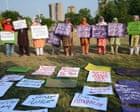
People protest after an acid attack on Dr Mahnoor Nasir, in Islamabad, Pakistan, on 16 June. Photograph: NurPhoto/Getty Images View image in fullscreen People protest after an acid attack on Dr Mahnoor Nasir, in Islamabad, Pakistan, on 16 June. Photograph: NurPhoto/Getty Images Global development ‘If a woman is killed, they say she fell, she took poison’: Pakistan’s devastating rise in ‘hidden’ sexual violence Karachi’s chief police surgeon condemns increasing acceptance of domestic murders and rapes of women and girls
About this content Zofeen T Ebrahim Mon 13 Jul 2026 07.00 CEST Last modified on Mon 13 Jul 2026 07.02 CEST Share Prefer the Guardian on Google A white-bearded man looks straight into the camera, in the video circulating for the past few weeks on social media. “I killed my wife,” he says calmly in Urdu. “We have a give-and-take arrangement and when she refused to give, I said I would take.”
Hours earlier, the 64-year-old had walked into a police station in Karachi’s Orangi neighbourhood and confessed to murdering Asma Begum, a 58-year-old mother of four, in the home they shared because she had refused him sex.
View image in fullscreen The man pictured on video allegedly confessing to the murder of Asma Begum. Photograph: Handout The next day, a lift operator at Quetta’s government-run Civil hospital threw acid on a 29-year-old doctor, Mahnoor Nasir , when she opened her door. The suspect was later killed during police efforts to detain him as he allegedly tried to flee the city. Nasir, who sustained burns to 35% of her body, was airlifted to Karachi for treatment.
Two days later, on 7 June, an unconscious 17-year-old girl in Jhang, Punjab, was dumped at a hospital by three men. Police arrested suspects using CCTV footage from the hospital. They said the girl had been kidnapped, drugged and gang-raped. She later died.
Also in June, shortly before dying from complications related to multiple abortions, an 18-year-old housemaid told police in Lahore that she had been repeatedly raped by her employer’s son and his driver.
“The severity of violence has gone through the roof,” says Dr Summaiya Syed-Tariq, the chief police surgeon in Pakistan’s Sindh provincial health department, who has spent 26 years documenting violence in Karachi’s medico-legal system.
View image in fullscreen Dr Summaiya Syed-Tariq, chief police surgeon in Sindh health department. Photograph: Diego De La Rosa/UN Women “As a society, our tolerance and acceptability towards violence have increased manifold. These cases are just the tip of the iceberg,” Tariq says.
Describing Karachi as a “petri dish” of crime because it is such a melting pot of people and ethnicities, Tariq says the city reflects many forms of violence experienced by Pakistan’s women, which is often concealed, misreported or never reported at all.
“If the woman has been killed in the process, they will say, she fell, she took poison, she burnt herself, or she committed suicide. In the last case, they often stage the entire event by hanging a flimsy scarf from a ceiling fan.”
Tariq says that along with providing vague information, families’ refusal to allow a postmortem examination remains one of the biggest hurdles. “There is such a hue and cry, although it is against the law,” she says, adding: “It’s because they don’t want us to confirm what we already suspect.”
The scale of such hidden violence, Tariq says, underscores the need for better documentation: “We need to count these wo…