
Doctors may soon be able to identify patients most at risk of losing their limbs years before serious symptoms appear, thanks to a recent genetic study that has revealed genetic markers that may help predict complications of peripheral artery disease, one of the most common and serious vascular diseases.
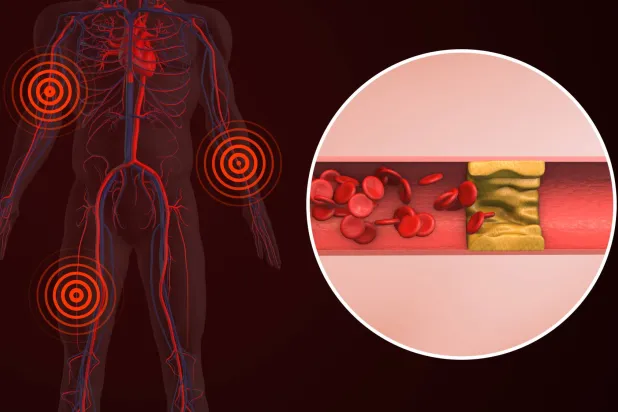
Peripheral artery disease affects millions of people worldwide, occurring when fatty deposits build up inside the arteries that supply blood to the legs, arms, or pelvis, reducing blood flow to the limbs. In advanced cases, a lack of blood supply can lead to permanent tissue damage, making amputation the only medical option to save the patient’s life.
In the United States alone, about 150,000 leg amputations are performed each year due to complications from this disease, according to the American Heart Association. However, doctors are still unable to determine which patients will face this fate, even though the number of people affected by the disease ranges from 10 to 12 million.
A new study conducted by researchers from Northeastern University in the United States and published in the International Journal of Molecular Sciences on April 10, 2026, represents a significant step toward changing this reality.
The research team relied on a technique known as genome-wide association study (GWAS), a scientific methodology used to find genetic differences associated with a specific disease by comparing the DNA of thousands of individuals. The researchers utilized a massive database from the All of Us program, overseen by the National Institutes of Health in the United States, which aims to gather health and genetic information from volunteers of various backgrounds to support the development of precision medicine.
After analyzing thousands of genetic records, scientists were able to identify 38 genetic variants that may be linked to an increased risk of severe forms of peripheral artery disease—forms that may end in limb loss.
Notably, many of these genetic variants are associated with crucial biological functions within the body, including the regulation of inflammation and the formation of blood vessels and capillaries, which play a fundamental role in the development of the disease and its complications.
The researchers believe that the importance of these findings lies not only in achieving a better understanding of the disease but also in their potential future application in developing genetic tests to identify patients most at risk before advanced symptoms appear.
Dr. Said Amal, a professor of biomedical engineering at Northeastern Portland University and a study collaborator, states that patients often do not seek medical advice until severe pain in the legs or arms manifests, and in many cases, it may be too late to save the affected limb. He added that the ability to identify those at risk of amputation early could allow doctors to intervene preventively using appropriate medications or treatments before the disease reaches advanced stages.
This study falls within the accelerating global trend toward what is known as precision medicine or personalized medicine, an approach that relies on the genetic and biological characteristics of each individual to design more effective treatment plans. Researchers affirm that understanding the genetic factors associated with complications of peripheral artery disease may one day enable the personalization of treatment based on each patient’s risk level rather than relying on a one-size-fits-all treatment approach.
It may also assist in directing medical resources to patients most in need of monitoring and early intervention, potentially reducing amputation rates and improving the quality of life for thousands of patients.
Despite the significance of the findings, researchers caution that the study is still in its early stages, as the analyses were based on a single database, meaning the results need to be validated in other populations before being clinically adopted. Therefore, the team is currently collaborating with other medical centers and universities in the U.S. to analyze data from additional patients and ensure that the identified genetic markers can indeed predict the risk of amputation in various populations. Scientists hope that these efforts will lead to the development of new diagnostic tools that allow doctors to transition...