
Maryam Abdulrahman Al-Haykan 2026/07/16 Guidelines 2 Visits
Today, e-learning platforms have become an essential part of our school day. Students log in, participate in activities, upload assignments, and dozens of indicators about their learning behavior are recorded behind the scenes.
Are we really benefiting from this data to improve learning?
Or does it remain just numbers in periodic reports that do not affect our educational decisions?
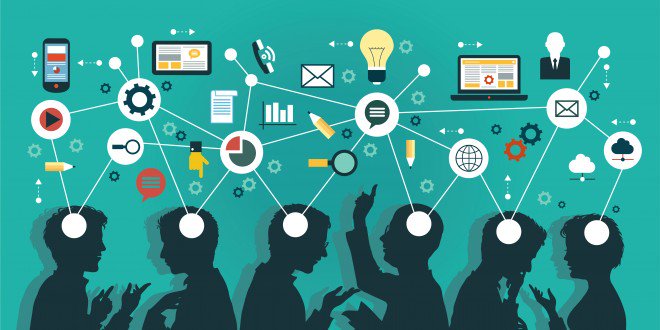
Every interaction a student has within the learning platform is, in fact, a behavioral indicator. Login time, duration of stay, number of contributions, browsing pattern — all these signals can help us understand the learning experience more deeply.
Learning analytics does not mean extracting a statistical report only, but reading these indicators within a clear educational context.
There is a big difference between knowing how many times a student logs in and understanding when they log in, how they interact, and whether they continue to engage over time or gradually decline.
When we start to ask this type of question, data transforms from static numbers to an educational story that can be understood.
In a recent study that discussed the employment of big data analytics tools in e-learning environments, patterns of student interaction within the learning management system were analyzed to understand their relationship with academic performance and support personalized learning.
The results showed that student interaction does not follow a single pattern.
Some interact at specific times of the day, while others rely on short, frequent logins, and some prefer longer, fewer sessions.
Interestingly, consistency in interaction was a clearer indicator of academic performance than just the number of logins. This means that the participation pattern over time may be more indicative than momentary activity.
These results reshape our understanding of digital learner behavior.
It’s not just about the quantity of activity, but its quality, consistency, and context.
The value of learning analytics emerges when we use it to make practical educational decisions.
If the data reveals that students interact more at certain times, activities could be rearranged or announcements timed accordingly.
And if early indicators show a decline in interaction among some students, proactive support can be provided before it affects their academic performance.
It’s not about redesigning the entire curriculum, but about making thoughtful improvements based on a conscious reading of the data.
Here, data transforms from a descriptive tool to a guiding tool.
It’s important to emphasize that the goal of learning analytics is not to monitor the student, but to understand them.
When data is used with educational awareness, it becomes a means to support the learner and enhance their experience, not to judge them.
The real challenge is not the availability of data, but building an educational culture capable of interpreting it and turning it into practical realities in classrooms and platforms.
In educational environments characterized by diversity in backgrounds, abilities, and learning styles, it no longer makes sense to assume that all students learn in the same way.
Learning analytics gives us a chance to understand this diversity objectively, away from general assumptions. Thus, personalized learning becomes an educational necessity, not just a technical option.
Improving learning outcomes in the digital age relies not only on developing platforms but also on developing our thinking about data.
Data already exists in our systems, and what we need today is the ability to understand and utilize it in educational decisions that serve the student first.
When we understand learner behavior, we become closer to designing a more equitable, effective, and responsive educational experience to their real needs.
This article relied on the results of the research published in:
Utilizing Big Data Analytics Tools in E-learning Environments to Improve Personalized Learning Experience.
International Journal of Learning, Teaching and Educational Research (IJLTER