
Indicators of division within the Federal Reserve are increasing regarding the next step in monetary policy, with inflation risks returning to the forefront due to rising energy prices and ongoing spending on artificial intelligence, at a time when the Council Chair Kevin Warsh insists on not giving any prior signals to the markets. Meanwhile, several policymakers have clearly hinted that an interest rate hike may become necessary if inflation does not resume its downward path.
In this latest indication, Federal Reserve Governor Lisa Cook announced on Wednesday that she is "ready to act" if inflation rates do not begin to decline soon, while also confirming that she prefers to give the economy more time before making any decision.
Cook stated, in remarks prepared for delivery before the Exchequer Club in Washington: "I think it is wise to give more time to monitor the developments in inflation from here on out, but I believe the risks still strongly tilt towards rising inflation," pointing to the investment boom in artificial intelligence and pressures due to tariffs and the war in the Middle East, all of which could keep price pressures elevated.
She added: "If we do not see signs of inflation declining soon, I am ready to act," asserting that her commitment to bringing inflation back to the bank's target of 2 percent is "firm and unwavering."
Cook noted that the balance of risks has changed noticeably compared to last year, as inflation risks now exceed risks associated with labor market weakness, after previous concerns were focused on slowing employment alongside declining inflation.
Her comments come at a time when debate within the Federal Reserve over the need to raise interest rates is intensifying, as bank governor Christopher Waller earlier in the week indicated that the bank may need to act unless sustained evidence emerges over the next few months of slowing inflation.
Conversely, the path of monetary policy has become more uncertain following data showing a slowdown in consumer and producer price inflation during June, which bolstered market bets on delaying any interest rate hike, even as risks linked to rising oil prices and geopolitical tensions continue.
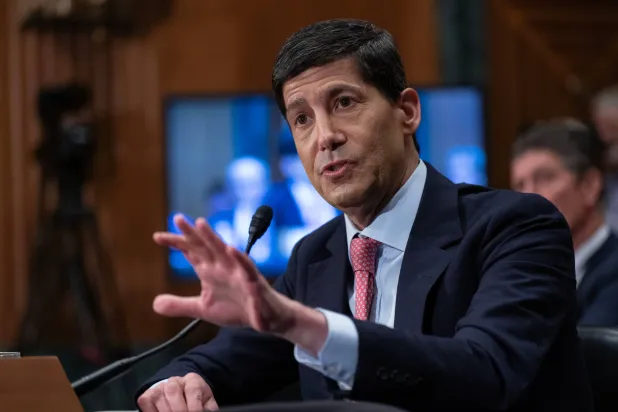
This comes as Federal Reserve Chair Kevin Warsh continues to refrain from disclosing his stance on the upcoming interest rate path, emphasizing that the bank will make its decisions based on developments in economic data, not based on market expectations. He stated before Congress that the Federal Reserve will assess its tools, whether interest rates or the balance sheet, to determine if monetary policy needs to be adjusted to address inflation, but he declined to specify the conditions that might warrant raising, maintaining, or lowering interest rates, considering it better for markets to monitor economic data rather than relying on statements from central bank officials.
Warsh is testifying before the Senate Banking, Housing, and Urban Affairs Committee (AP)
For her part, Cook confirmed that the current interest rate, which ranges between 3.50 and 3.75 percent, is "moderately restrictive," which means it could help lower inflation, but she stressed that the Open Market Committee can afford to wait to monitor more data before assessing whether the current monetary policy is sufficient to achieve the target.
The Federal Reserve's next meeting is scheduled for July 28 and 29, amid market anticipation for any new indicators regarding the timing of the next step in the interest rate path.