
Restaurants that reflect a country’s colonial past are something I’ve become more conscious of in recent years, but a piece by Vijayta Lalwani in the online magazine Vittles on how war and the closure of the Strait of Hormuz have sparked a cooking gas and energy crisis in India set me thinking about how we talk about street food.
In it, she writes that chulhas, the traditional firewood stoves, are “viewed nostalgically by the elite classes”, but the reality is starkly different. The smoke makes them impossible to use inside small, modest homes. Until three months ago, one woman Lalwani meets in Pune cooked indoors, in her one-room, tin-walled home, on a gas stove. Now, with a scarcity of gas cylinders and black-market prices beyond her means, she cooks outside on a chulha. With daytime temperatures hitting 40 degrees, cooking has to be done early in the morning or in the evening.
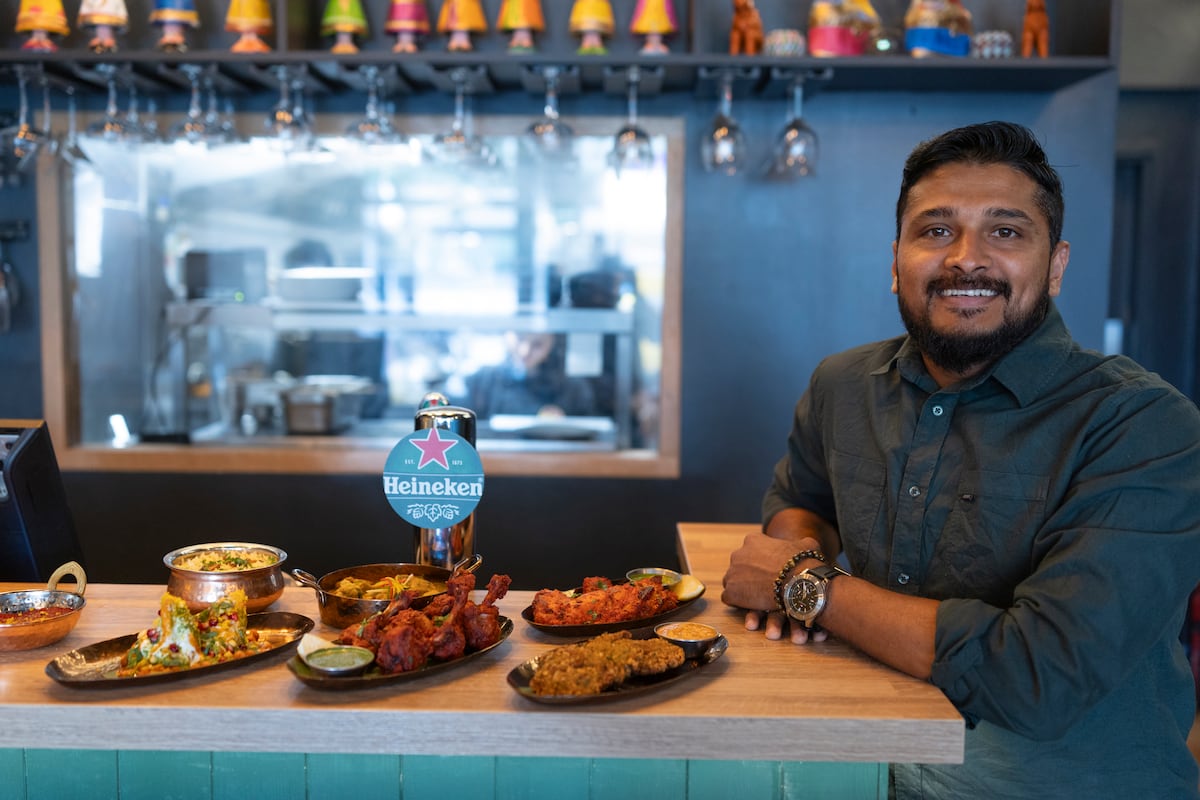
The smoke, flame and firewood of a chulha are not required for cooking a dosa, a thin pancake made from a batter of fermented ground rice and lentils, so when Karthik Thiru started trading from The Place Street Food Yard in Grand Canal Dock in 2020, his Dosa Dosa food truck was equipped with a large flattop griddle to cook them on. He had missed the taste of home, seen that no one was selling dosa – you’ll find it in other restaurants now – and discovered that many of his fellow Indians missed it too. He now has a converted shipping container in the same spot, has grown a catering business using the food truck and, in 2025, opened Dosa Dosa restaurant in Rialto, Dublin 8 .
The menu features his street-food dishes – dosa, idli, vada and uttapam – which are eaten in homes and restaurants as well as on the streets of south India, alongside the cooking of Thiru’s native Thanjavur, the former imperial Chola capital in Tamil Nadu. The head chef, Partiban Veerappan, hails from neighbouring Puducherry.
We walk through the covered outdoor seating area into an air-conditioned room, a huge relief as it’s one of the hottest days of the year. A spicy margarita (€11.99) with Madras spices and a bottle of Cobra (€7) are ordered immediately. The margarita gets lost in the bustle of a full restaurant but, after a reminder, turns up about half an hour after it was ordered.
From the snacks and small bites section, the spinach masala vada (€10), three spinach and lentil fritters, are deceptively good eating, dipped into a spicy tomato chutney. Crisp on the outside, yielding to a soft interior, they’re speckled with what I’m guessing are coriander, parsley, coriander seed, fennel seed and curry leaf. Mark this as a must-order item.
We do, of course, order a dosa – my favourite, the award-winning gunpowder ghee masala dosa (€14). I look around the restaurant, and most diners have done likewise, tucking into a deliciously crisp, fermented pancake that looks like a large galette loosely rolled into a cylinder. But it’s quite different. The inside is brushed with ghee and dusted with the gunpowder spice blend, which brings a hot edge. The filling of masala potatoes adds another layer of flavour, as do the accompanying chutneys and sambar.
The curries include a choice of sides – rice, kal dosa or Malabar parotta – which makes the mango fish curry with Keralan spices (€18) look incredibly good value. It’s a red sauce with a lovely depth of spicing – rich but not too hot, with a sour tanginess that keeps it balanced. The flaky parotta bread takes on the moppage role admirably. We c...