
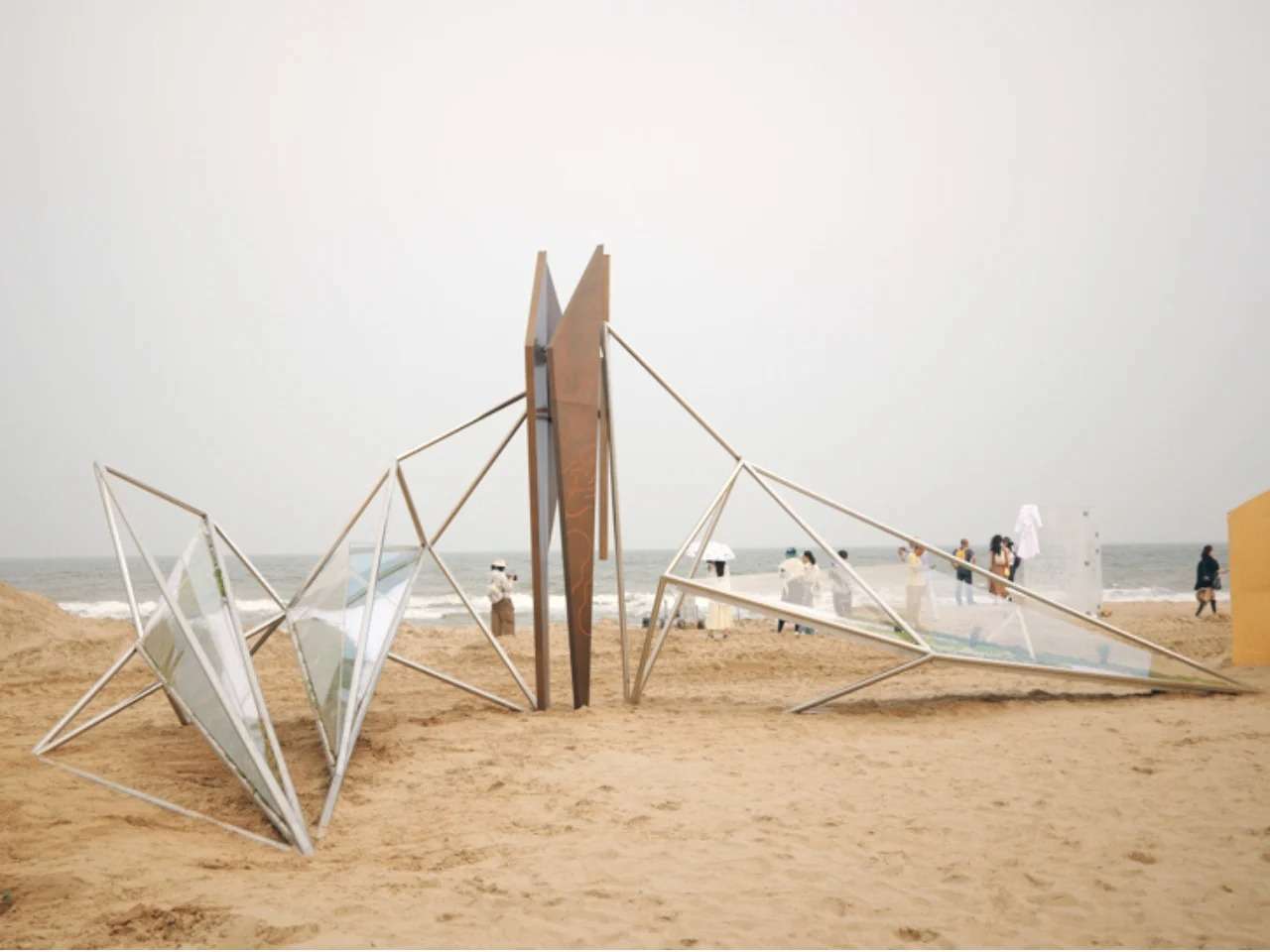
July 16, 2026 July 16, 2026 Home » Projects » OAS/S-AETHER: A Light Installation Exploring the Dialogue between Nature and Matter on the Aranya Coast. The structural fusion and dialogue with the coast - the installation is positioned on the sandy shore as a lightweight structure that redefines the relationship between mass and the open horizon, without imposing an overwhelming visual presence on the natural scene. It consists of a network of interconnected metal rods forming a winged structure elevated above the ground, granting a sense of lightness and balance. This structure does not close off the visual field but frames the coastal scene and allows the continuous flow of winds through its voids, while the shadows cast by sunlight on the sands change with time, making the natural lighting part of the architectural design itself.
The project relies on light as a structural element no less important than matter. The glowing acrylic light boxes appear suspended within the metal structure, embodying the concept of ‘aether’ in a tangible, perceivable form. The contrast between the rigidity of the metal rods and the transparency of the acrylic creates a visual rhythm that changes with the visitor's movement and shifts in viewpoint, turning the act of traversing into a spatial experience where light, matter, and void intermingle in a single scene.
Perception of the installation changes depending on the viewing distance; from afar, it appears as a delicate metal network interacting with light and sky, while close viewing reveals the variety of materials and their multiple layers. The engraved copper plates add a visual texture that softens the harshness of the steel structure, while the incorporation of live plants within the acrylic boxes consolidates the presence of natural elements within a contemporary industrial structure. This integration not only achieves a visual contrast but affirms the complementary relationship between natural matter and manufactured building materials, enhancing the expressive identity of the installation.
The value of the project is closely tied to its location on the Aranya Coast in the city of Qinhuangdao, a site that has gained prominence for hosting numerous contemporary architectural and artistic projects. In this context, the coast serves not only as a natural backdrop but becomes part of the spatial experience, where the installation interacts with the sandy expanse, sea, and sky to form a balanced presence that harmonizes with the surrounding environment without competing with or overshadowing it.
The identity of the installation visually and spatially changes with the passage of hours of the day, revealing different facets of the architectural composition. During the day, natural light dominates the scene, weaving patterns of moving shadows over the sands as sunlight passes through the metal rods, making the structure part of the rhythm of the natural site and its continuous transformations. As night falls, the presence of the installation shifts entirely, with the metal lines receding in the visual scene in favor of the glowing acrylic panels that become the main light source, transforming the structure into a luminous element that appears to float within the coastal void, maintaining the vibrancy of the place after the natural light has disappeared.
The project represents an extension of architectural research exploring the relationship between temporary structures and the possibility of producing a lasting presence in memory and space. This approach relies on employing different materials and reshaping their relationship with the natural environments they inhabit, so that the speed of assembly and disassembly does not become an obstacle to the spatial value of the work. Rather than settling for formal experimentation, the project presents a model showing how temporary installations can produce impactful architectural experiences through the interaction of matter, light, and site.
Many contemporary art installations face the challenge of transforming into quickly consumable images through digital platforms, where the allure of the photographic scene may overshadow the spatial value of the work. However, this installation transcends the boundaries of the abstract visual image by relying on a multilayered experience that combines light, matter, and movement. It does not merely provide a backdrop for photography but invites the visitor to engage with its composition and understand the relationship between its structural elements and the surrounding environment, imparting a presence that transcends the fleeting visual moment.
The installation organizes a transitional experience that merges the natural openness of the coast with the material presence of the architectural intervention. As one traverses the structure,...