
Home Features How Qatar’s World Cup Transformed the Country
Author: Chloe Domat | Photos: Shutterstock
As the world's biggest sporting event closes, a look at the multi-billion dollar legacy left in Doha.
This article appears in the July/August 2026 issue of Global Finance Magazine.
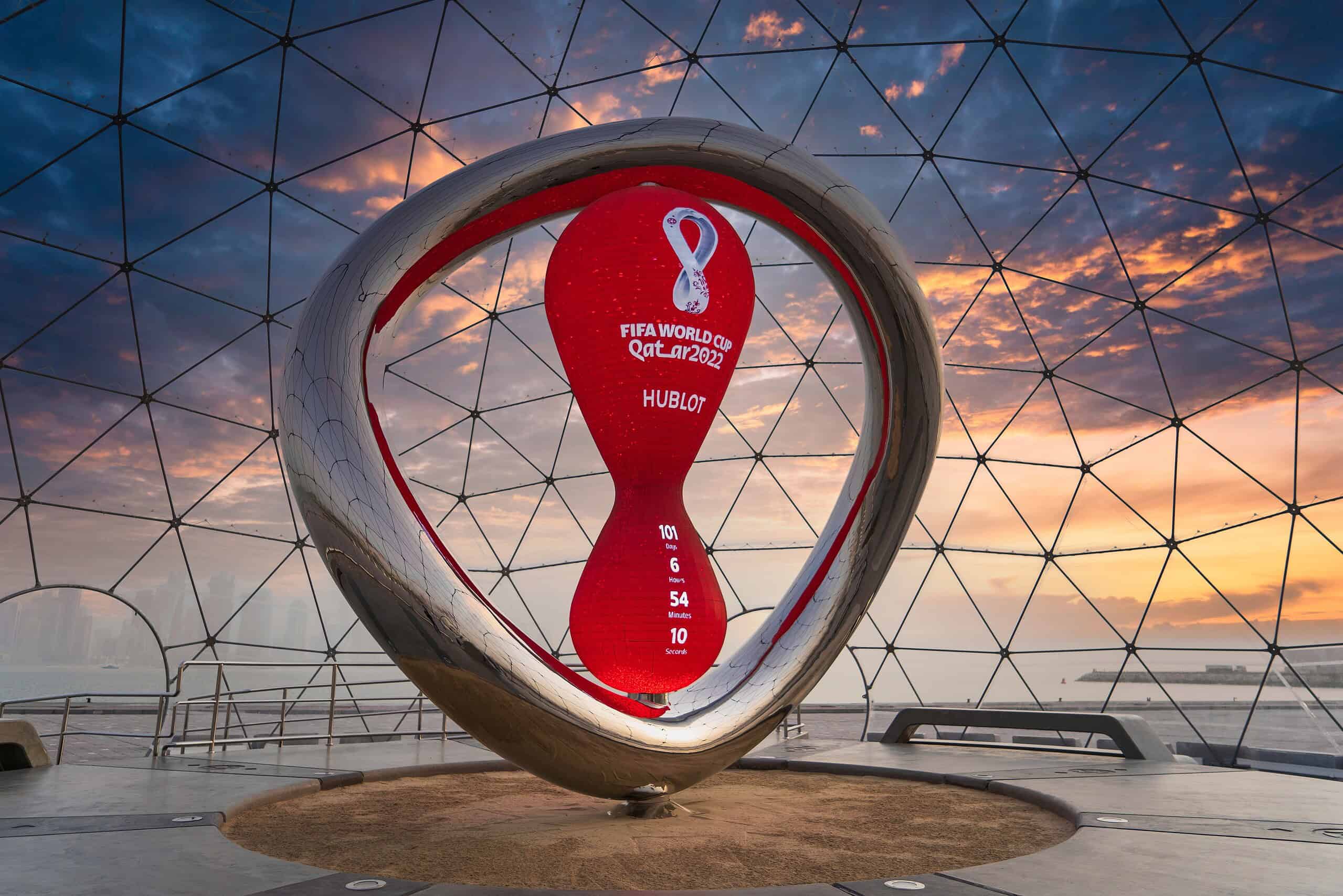
Three and a half years ago, the FIFA World Cup kicked off in Doha, at a stadium inspired by a traditional Bedouin tent. The opening ceremony featured archival footage of young Sheikh Hamad bin Khalifa Al Thani, Qatar’s former emir, playing football in the desert, a reminder of how rapidly the tiny Gulf state had transformed over the past decades.
Today, Qatar is one of the richest countries in the world by GDP per capita. Its vast natural gas reserves have made it a leader in the liquefied natural gas (LNG) industry and a major sovereign investor. Hosting the world’s most popular sporting event was the cherry on top.
“What the world witnessed was not simply a successful sporting event but the visible outcome of decades of investment in infrastructure, connectivity, and institutional development,” said Yousef Mahmoud Al-Neama, group chief business officer at Qatar National Bank (QNB) — the country’s biggest bank with more than $381 billion in assets . “As a result, investor perceptions have evolved. Qatar is increasingly viewed not solely through the lens of its natural resources but as a diversified, globally connected economy with the ambition and capability to compete across multiple sectors.”
The 2022 World Cup was “an inflection point for Qatar,” added Sheikh Abdulrahman bin Fahad bin Faisal Al Thani, group CEO of Doha Bank . “What has followed is a steady strengthening of Qatar’s global position, marked by growing investor interest, improved international rankings, and sustained economic activity.”
The event’s scale was unprecedented. Qatar reportedly spent about $220 billion preparing for the tournament, making it by far the most expensive World Cup in history. Looking more closely, new stadiums cost only about $6.5 billion: a fraction of the total spend. The overwhelming majority of investment went to long-term infrastructure, such as the Doha Metro, the airport, and upgrades to roads and utilities, which continue to contribute to the country’s non-hydrocarbon economy.
The financial return, however, was modest when measured by direct revenues. According to Qatar’s Government Communications Office, the tournament generated about $2.2 billion in direct proceeds, and long-term economic gains should reach $2.7 billion by 2035. The International Monetary Fund (IMF) estimates that tourism spending by visitors and World Cup-related broadcasting revenue total between $2.3 billion and $4.1 billion, or roughly 1% of GDP.
International critics have accused Qatar of spending lavishly on the event, but local banks view the investment through a different lens. Asked whether they have seen a meaningful return on the capital deployed before 2022, Al Thani is unequivocal.
“The short answer is yes, and the numbers support it. Qatar’s banking sector entered the World Cup cycle from a position of strength and emerged from it stronger,” Al Thani said. He noted that total assets of Qatar-listed banks grew to $645 billion in 2025 from $554 billion in 2022 while net profits roseto $8.1 billion from $7.2 billion over the same period.
“What is significant is not just the scale of this growth but its consistency. Assets and profits that were sustained througho…