
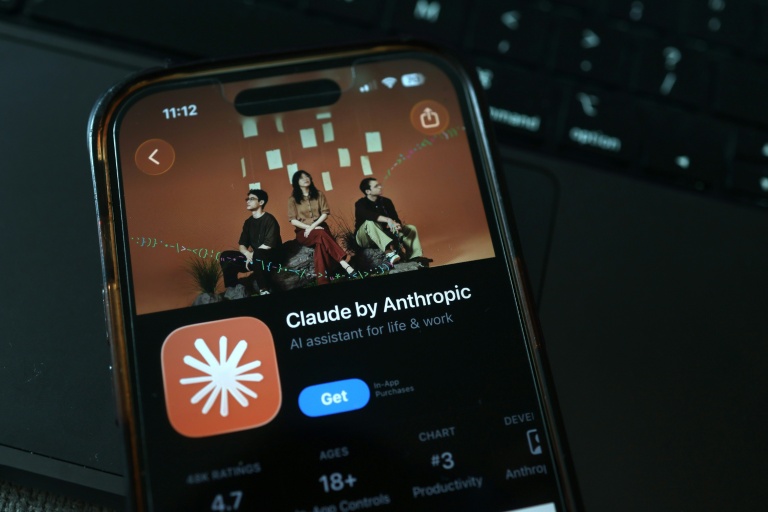
Companies using tools like Anthropic's Claude Code are letting small teams ship products that once required far larger workforces
Washington - When Eric Lauer needs to hire at Giftory, the online gift-giving platform he runs, he's no longer looking for eager young coders fresh out of college.
He wants "mid-career people who are lazy in a smart way" - experienced developers he calls architects who know how to wield AI coding tools to multiply their output rather than write every line from scratch.
"To be an architect, you need that previous world experience, and you need to know all the workflows," Lauer told AFP. Candidates with "no knowledge whatsoever of the workflows" are "a lot less appealing for an organization like ours."
It is a calculus playing out across the tech industry as a new generation of AI-powered coding assistants transforms how software gets built.
Companies using tools like Anthropic's Claude Code are letting small teams build products that once required far larger workforces, but also squeezing out the entry-level jobs that young programmers have relied on to launch their careers.
These programs - which also include OpenAI's Codex - have completely flipped the script on programming, turning coders from line-by-line typists into "project managers" who can use AI to instantly write, test and fix software with just a simple text prompt.
The switch to AI coding is undeniable. Among developers at small startups surveyed by the industry newsletter The Pragmatic Engineer, 75 percent reported using Claude Code.
A quarter of startups in Y Combinator's Winter 2025 batch were built on code that was 95 percent AI-generated, according to Managing Partner Jared Friedman.
- 'Not pulling the trigger' -
Lauer said Giftory's roughly 30 employees get a premium AI subscription costing about $200 a month - "peanuts" stacked against an average salary of $100,000 a year, and cheap enough to make offshoring "uncompetitive."
Haitham Mengad, co-founder of Stems Labs, said he took a similar approach.
"We already had a pretty lean team and very talented engineers, so the approach I took was, let's do more with the people that we have."
Lindsay Euller, vice president of customer success at the software company Espresa, said her team’s AI use is saving "millions of dollars a year."
"I think we'll get to a point where if I have to request headcount, I'll be asked, 'How are you optimizing AI?'" before any new hire is approved, Euller told AFP.
But the efficiency gains reshaping startups are casting a long shadow over the next generation of programmers.
A Stanford Digital Economy Lab study analyzing payroll data from millions of US workers found that employment among 22- to 25-year-olds in occupations most exposed to AI - including software development - declined nearly 20 percent from a late 2022 peak.
Harvard researchers analyzing resume and job posting data covering some 62 million US workers across 285,000 firms found that junior employment at companies adopting generative AI dropped roughly nine percent relative to non-adopters within six quarters - even as senior employment kept rising.
"I think there's a lot of hesitation in hiring…