
Lea is an esports journalist with too many interests and too little time. Covering esports stories for more than 3 years, she likes to spend her days (and nights) watching and analysing competitive VALORANT. Lea is also deeply invested in DEI issues and promoting mental health awareness within her industry.
Olivia Richman is a seasoned esports journalist who has worked with Inven Global, Esports Illustrated, Esports.gg, and more. As an editor and writer at Esports Insider, she loves telling unique esports stories, especially within the FGC. When not working and gaming, Olivia loves collecting Kirby plush, eating sushi, and driving her cars at the track.
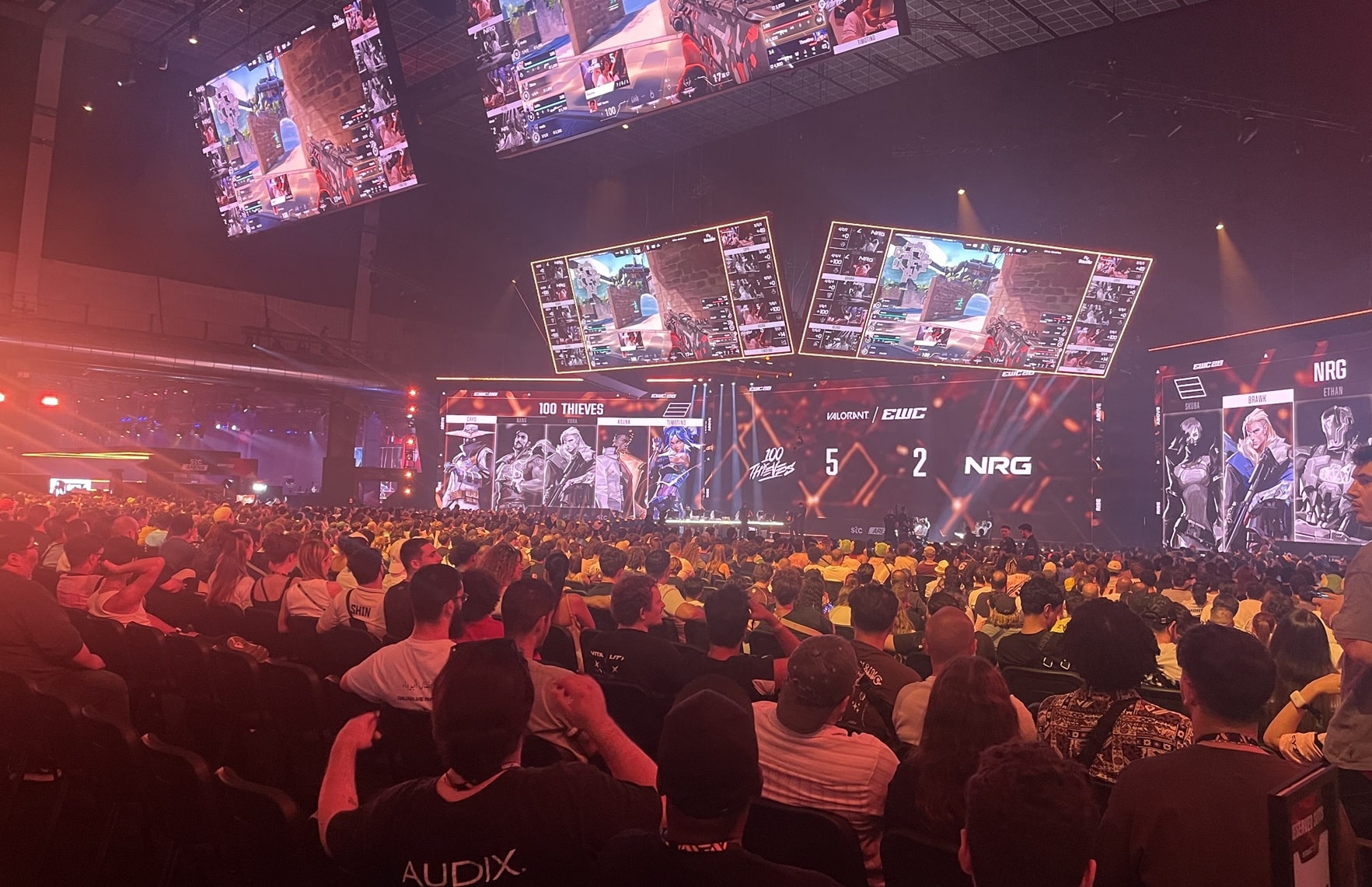
Image Credit: Esports World Cup Last week, insights from a recent episode of The Vodfathers podcast sparked heated discussions about the Esports World Cup (EWC) VALORANT tournament.
According to esports broadcast talent and The Vodfathers co-host, Josh “Sideshow” Wilkinson , some esports organizations prioritize the EWC over their performance in Riot Games’ semi-franchised VALORANT Champions Tour (VCT) due to the massive monetary revenue associated with the Saudi Arabia-funded event. Moreover, these teams allegedly fire VALORANT players and staff should they refuse to compete in the EWC.
“So I was like: Hmm, maybe it’s not actually voluntary. Maybe these players are being forced to burn themselves out horribly for VCT,” concluded Sideshow during the podcast.
As a result, some community members considered these organizational policies “coercion,” while others emphasized the business incentives behind EWC participation.
EWC-related issues continue to divide the VALORANT scene. Meanwhile, Saudi Arabia’s sportswashing campaign gains increasing influence not just over esports organizations and their management decisions, but also over the VCT calendar.
Image Credit: The Esports Foundation The first VCT franchise era was announced in 2022. It was designed to provide a stable, highly competitive environment with breaks throughout the annual Tier 1 esports calendar to allow teams to recharge and adjust to mid-season meta changes.
What determines the quality of competition of an esports tournament? There’s the format to consider. Usually, double-elimination brackets are preferred over single-elimination formats. A strong team can still have a bad day or matchup, which would mean instant elimination from a single-elimination event. On the flip side, weaker teams can make significant progress in a single-elimination bracket by achieving a couple of upsets.
Another factor is ping, which affects how quickly a game responds to player inputs. The lower the ping, the better. Therefore, Riot Games invested in local LAN environments for its VCT events. The EWC, on the other hand, hosts parts of its VALORANT tournament online.
It also uses single-elimination brackets for both its regional qualifiers and the main event’s Playoffs stage. You heard that right: the EWC crowns its annual VALORANT champion via a single-elimination bracket.
Therefore, despite its massive prize pool, the EWC is viewed as a “Mickey Mouse” tournament: a tournament of low competitive significance, by many in the VALORANT esports scene.
Now, if the EWC were only a Mickey Mouse tournament, that would be one thing. Unfortunately, Saudi Arabia’s esportswashing flagship can also heavily impact the performance level of teams in the VCT.
In one of my previous articles , I discussed how different VCT events and…