
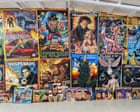
Hand-painted film posters on show at the Centre for National Culture in Accra, Ghana. Photograph: Carlos Mureithi/The Guardian Hand-painted works are often wildly unfaithful to the movies they portray – reinterpretations that sometimes resulted in threats, insults and even physical attacks from viewers who felt duped
Prefer the Guardian on Google S itting on his porch in Teshie near Accra, Heavy J dipped a brush into red oil paint and dabbed it carefully on to his canvas – a flour sack – adding blood to a knife being wielded by a man. Higher on the canvas, he had started on an outline of a skull.
Heavy J was creating a poster, but not as you might have expected for a horror film. Instead, it was for the animated fairytale The Little Mermaid. The man with the knife wasn’t a killer but the film’s kind-hearted prince, Eric. The skull was also unrelated to the story. “We add more to make people interested,” said Heavy J, whose real name is Jeaurs Affutu.
View image in fullscreen Jeaurs Affutu, popularly known as Heavy J, with his unfinished poster for The Little Mermaid. Photograph: Carlos Mureithi/The Guardian Hand-painted film posters by local artists were a hallmark of Ghanaian film culture from the late 1970s to the early 2000s, used to advertise screenings for neighbourhood venues known as video clubs after organisers realised that the original posters were not attracting audiences.
Plot lines were regarded as little more than jump-off points for humorous and surreal flights of fancy. Artists working for different video clubs competed to make the best “forgery”, as they described their interpretations.
The practice began to wane around the turn of the century as more Ghanaians gained access to electricity and their own TV sets and video players. Many video clubs went out of business and painters pivoted to create other work. But by then the posters had attained global interest, popularised in books and foreign exhibitions, and old and rare paintings became prized collectibles.
There was a lull in interest in newly painted posters in the early part of the 21st century, but demand has risen, driven by online marketing and a receptive customer base of film lovers in the west.
Heavy J and Stoger create film posters Deadly Prey Gallery has been working with artists to preserve the culture of making hand-painted film posters, while helping meet the increased demand.
Named after an action film, the business was co-founded in 2012 by Robert Kofi, a Ghanaian who, as a child, used to work as a “hype man” for video centres in his home town of Winneba. He later started collecting and selling posters, then set up the business with Brian Chankin, then a video rental store owner in Chicago, after selling him some works.
View image in fullscreen Robert Kofi helped found Deadly Prey Gallery to preserve the culture of making hand-painted film posters. Photograph: Carlos Mureithi/The Guardian Deadly Prey Gallery works with 15 artists, including Heavy J, who has been painting posters for four decades, connecting them to online customers and shipping the artwork on completion.
Most orders come from the US, Kofi said. Old action, science fiction and horror films have the highest demand. Popular titles include The Exorcist and the Star Wars and Terminator franchises. And prices for commissioned pieces start at $600 (£450).
View image in fullscreen Benjamin Amartey, popularly known as Stoger, creates a poster for the film Poltergeist in his studio…