
Every product on this page was chosen by a Harper's BAZAAR editor. We may earn commission on some of the items you choose to buy.
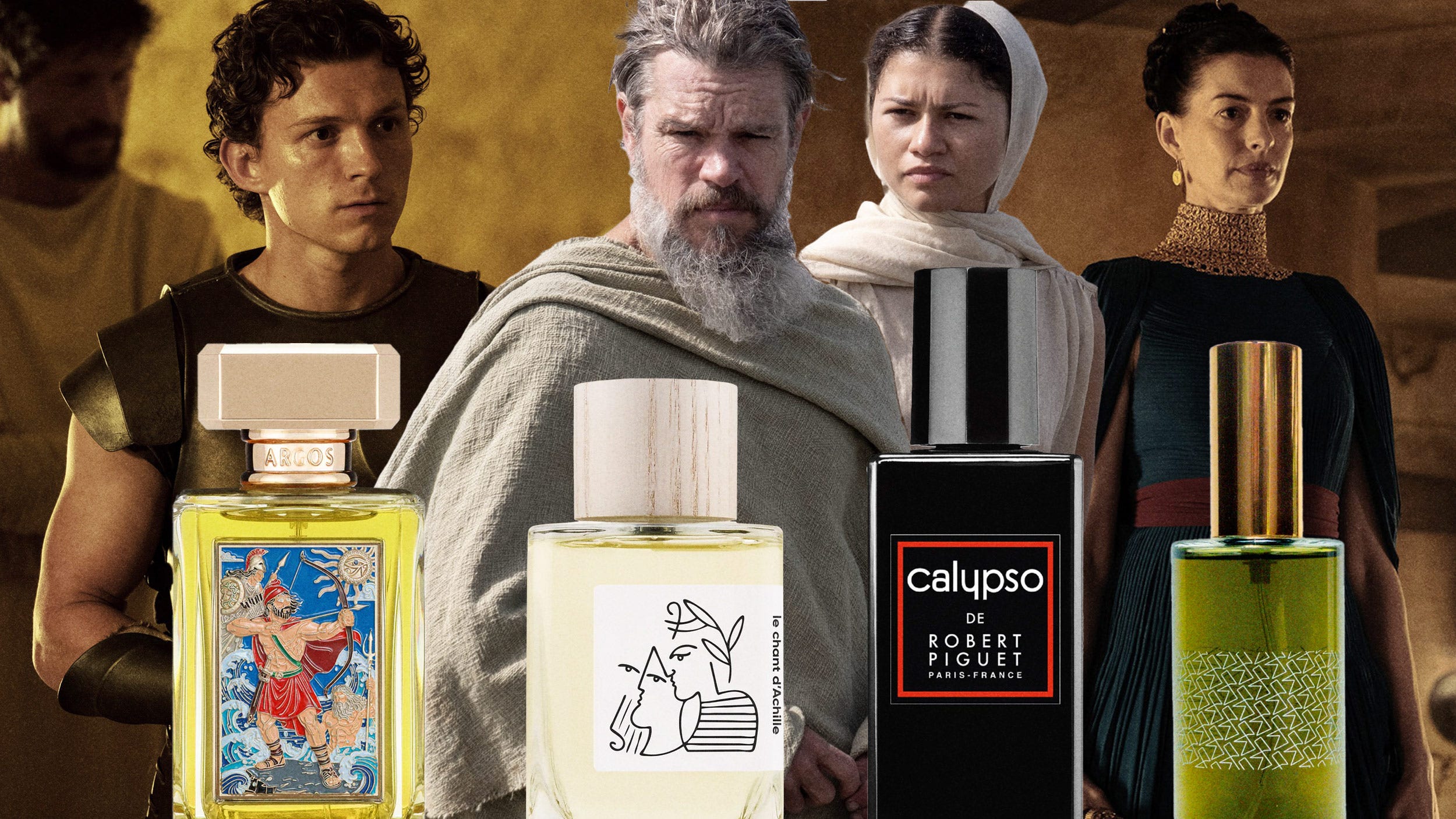
The Odyssey/Courtesy of Brands Beauty Perfume & Fragrance The Epic Perfumes Inspired by The Odyssey The Epic Perfumes Inspired by The Odyssey From Homer’s original plants to Nolan’s film, here’s how perfumers keep reinventing the story in scent
T he Odyssey has been retold more times than anyone can count. It started as an oral tradition—so don’t let anyone tell you listening to audiobooks doesn’t count, because Homer’s original audience didn’t read it, either. They heard the story night after night, adding their own flourishes, every telling alive and adaptive. Then the translations came: Latin, medieval, modern, in languages from around the globe, then stage adaptations, novels, films. Each translation still inspires a riot—just ask Emily Wilson, the translator behind the 2017 retelling who has been accused of making the classic “too woke,” and whose approach is rumored to have inspired the 2026 Christopher Nolan cinematic adaptation . Nolan’s film iteration comes out today, and the theaters have already been packed since midnight, with some audiences arriving in clothes inspired by the film’s aesthetic, and Zendaya’s latest angelic premiere look alone has inspired a sea of glowy, fresh-faced sirens into the theaters.
But the story’s reach doesn’t stop there. Perfumers have been translating Homer into scent for centuries, and the past decade alone has given us some truly remarkable interpretations. If you’re planning to see the new film in theaters and want a truly immersive sensorial experience, here are the perfumes that will bring the story to your skin.
The first choice is Personne by ICONOFLY , a natural perfume based on the original text, research done by Laurent Dubreuil, professor of comparative literature, and a voyage by artist Laurent Derobert. Perfumer Alexandre Helwani is a cartographer of smell, translating a huge bounty of information. Each accord represents different stories and chapters. There is a litany of stories to sniff: wild laurel and rosemary and roses, the scent of shipwreck and hemp and pear—each minute brings a vignette of characters, and it is as enveloping as the original text. You smell the beeswax and kelp of the Sirens, the fig and fenugreek of the lands, violet leaf and oakmoss. Helwani was given a long list of materials he had to include, and most were harvested from the land mentioned. When you smell the sea, it is because Derobert went on a voyage to capture the water from the Mediterranean for this. The 2,700-year-old story inspired a voyage by Victor Beyard in 1927, which inspired another voyage for this scent: a continuous act of reinterpretation. All good stories find new ways to live again.
What makes this fragrance memorable is not just the complex story of monsters battled, but how Helwani manages to insert the human transformation. You do not observe the journey. You step into Odysseus’ presence through Helwani’s Anointing Accord: his particular combination of materials that represent the sensation of Odysseus meeting Nausikaa.
In The Odyssey , when Nausikaa bathes the blistered, feral Odysseus after her maidens have fled, she anoints him with olive oil. He transforms from a nobody, forgotten and alone, into somebody, cared for in a fragile moment. Helwani chose this moment as his opportunity for artistic license. “As I was working on the fragrance, I could…