
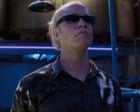
Tom Noonan as serial killer Francis Dolarhyde in Manhunter: The Final Cut. Photograph: Courtesy Rialto Pictures View image in fullscreen Tom Noonan as serial killer Francis Dolarhyde in Manhunter: The Final Cut. Photograph: Courtesy Rialto Pictures Michael Mann ‘People who commit heinous crimes can be victims’: Michael Mann on the provocative power of Manhunter at 40 As a stunning 4K restoration arrives in theaters, the director and cast reflect on creating the disturbing descent into a criminal underworld
Prefer the Guardian on Google Michael Mann has shown time and again in films like Thief , Heat , Miami Vice and Public Enemies that he is one of American film’s greatest explorers of the underworld. “It’s like a kind of cultural anthropology,” Mann tells me from his office in Los Angeles. “If you make films, you get to do that in a different place with a different subject every few years. For me, the exploration is the high.”
With its unsettling atmosphere and soaring beauty, Mann’s 1986 film Manhunter reimagined how a thriller could look, sound and feel in an early high point for the director. To commemorate its 40th anniversary Manhunter: The Final Cut , a 4K restoration and director’s cut with three minutes of new footage, will see a theatrical release in New York and Los Angeles this weekend with a nationwide US rollout to follow.
Read more Based on Thomas Harris ’s bestselling horror novel Red Dragon, Manhunter follows FBI agent Will Graham (William Petersen), who has been lured out of retirement to hunt down an elusive serial killer before he performs another ritualistic killing on the night of the next full moon. Graham has been called on for his uncanny ability to access the methods and motives of killers by adopting their states of mind, though it has come with its own personal costs. When we meet Graham at his secluded beach house (rented to the film by pop artist Robert Rauschenberg ) he’s recently returned from a stint in a psychiatric unit after a meltdown and a violent confrontation with the last prolific killer he captured but got too close to, Dr Hannibal Lecter (presented on screen for the first time here by Brian Cox ).
In a wounded and dreamlike fugue, Graham wanders through crime scenes late at night trying to psychically commune with the killer. Like the character he played, Petersen, who oscillates perfectly between dazed and hair-triggered here, had a hard time extricating himself from his work. “Your brain may know you’re acting, but your heart doesn’t,” Petersen said in a recent press release for The Final Cut. “Acting is a wonderful profession for giving you a rounded understanding of humanity. But you have to be careful not to get lost in it.” As soon as the film wrapped, Petersen shaved his beard and dyed his hair blonde to shake the role.
Stephen Lang, who plays the ethically bankrupt tabloid reporter Freddie Lounds, remembers it as a challenging but rewarding shoot. “ I’ve worked with other directors who are considered within the business to be demanding, Jim [James] Cameron being one of them. And when asked the difference between the two, I have said that Jim and I discuss everything. We debate everything. When Michael says jump, I generally say: ‘How high?’ I don’t challenge Michael,” Lang says. “Michael could be tough and he could be short. But you also knew he was extremely generous as a director. He could be a lot of things. There’s a volatility to him, as there is in so many artists. Michael is…