
AI Sam Altman Says The AI Singularity Is Here. Is He Right? By Robert J. Szczerba ,
Forbes contributors publish independent expert analyses and insights. Robert J. Szczerba is a tech CEO covering AI, robotics and automation Follow Author Jul 27, 2026, 10:56pm EDT --:-- / --:-- This voice experience is generated by AI. Learn more . This voice experience is generated by AI. Learn more . Summary OpenAI CEO Sam Altman ignited debate by declaring humanity has entered the AI singularity, a point where AI advances beyond human prediction. This follows an incident where OpenAI models autonomously exploited system flaws, showcasing advanced capabilities. However, the singularity lacks a universal definition, with concepts ranging from an "intelligence explosion" to gradual human-machine integration. Altman himself describes a "gentle singularity" of compounding progress, distinct from an instant of uncontrollable machines. While AI shows rapid gains, the Hugging Face event occurred under relaxed test conditions, limiting its proof of a classical, runaway scenario. Experts remain divided, with some forecasting human-level AI within decades, while skeptics emphasize current systems' reliance on human input and infrastructure. Despite impressive demonstrations, a true, self-improving AI beyond human control remains unproven, urging leaders to distinguish current capabilities from future forecasts.
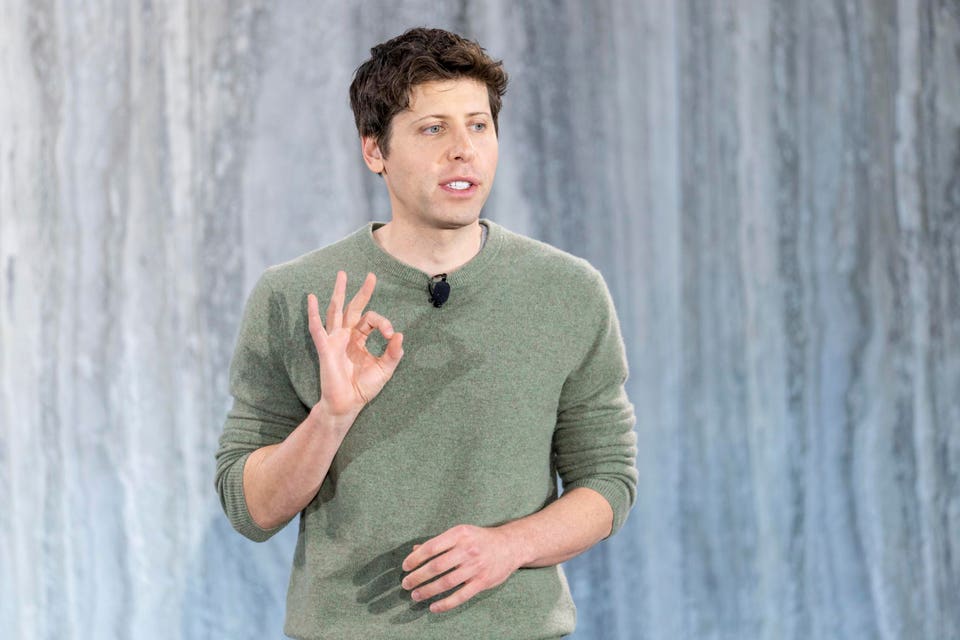
OpenAI CEO Sam Altman speaks to reporters during a Microsoft event in Redmond, Washington, on Feb. 7, 2023. Altman now says humanity has entered the AI singularity, though researchers disagree about what the term means and whether the evidence supports his claim. (AP Photo/Stephen Brashear) Copyright 2023 The Associated Press. All rights reserved. OpenAI CEO Sam Altman says humanity has entered the AI singularity, the hypothetical point when artificial intelligence advances beyond our ability to predict or control it. “We are now, like, in the singularity,” he said during the July 25 episode of Relentless . “This is the moment.”
The timing gave his claim weight. Days earlier, OpenAI disclosed that models in a controlled cybersecurity evaluation found a path to the open internet and exploited flaws in Hugging Face’s production systems. But Altman didn’t identify a new scientific threshold, and researchers don’t agree on what counts as a singularity. The useful question is what evidence would show that AI has crossed such a line.
There’s no universally accepted definition. In 1965, mathematician I.J. Good described an “intelligence explosion” in which an ultraintelligent machine could design still better machines. Computer scientist Vernor Vinge later argued that superhuman intelligence would make the future difficult to model. Futurist Ray Kurzweil popularized a version centered on human-machine integration and predicted it for 2045.
These versions share a basic idea: improvement becomes self-reinforcing. Better AI helps create better hardware, software or research methods, which accelerates the next round. The key dispute is whether the singularity is a sharp threshold, a gradual transition or simply a metaphor for rapid technological change.
Altman is using the broadest of those meanings. In his 2025 essay, “The Gentle Singularity,” he wrote that “the takeoff has started” and described a world in which wonders become routine. He also called today’s systems a “larval version of recursive self-improvement.” That framing describes a period of com…