
Consumer Tech United States Bans Chinese Humanoid & Quadruped Robots, Citing National Security By John Koetsier ,
Forbes contributors publish independent expert analyses and insights. Journalist, analyst, author, podcaster. Follow Author Jul 28, 2026, 08:42pm EDT --:-- / --:-- This voice experience is generated by AI. Learn more . This voice experience is generated by AI. Learn more . Summary The FCC has moved to block new Chinese-made advanced robotic devices, including humanoids and quadrupeds, and connected power inverters from the U.S. market. These items were added to the "Covered List" due to national security concerns, citing potential supply chain vulnerabilities, cybersecurity risks, and data collection by foreign powers. This decision effectively bars new models from receiving necessary FCC authorization, significantly impacting Chinese manufacturers who currently dominate the global humanoid robot market. FCC Chairman Brendan Carr emphasized securing critical supply chains. While existing models can still be sold, this forward-looking ban creates a protected market for emerging U.S. robotics companies, though it may also limit competition. Conditional approval remains a possibility for firms demonstrating no unacceptable risks.
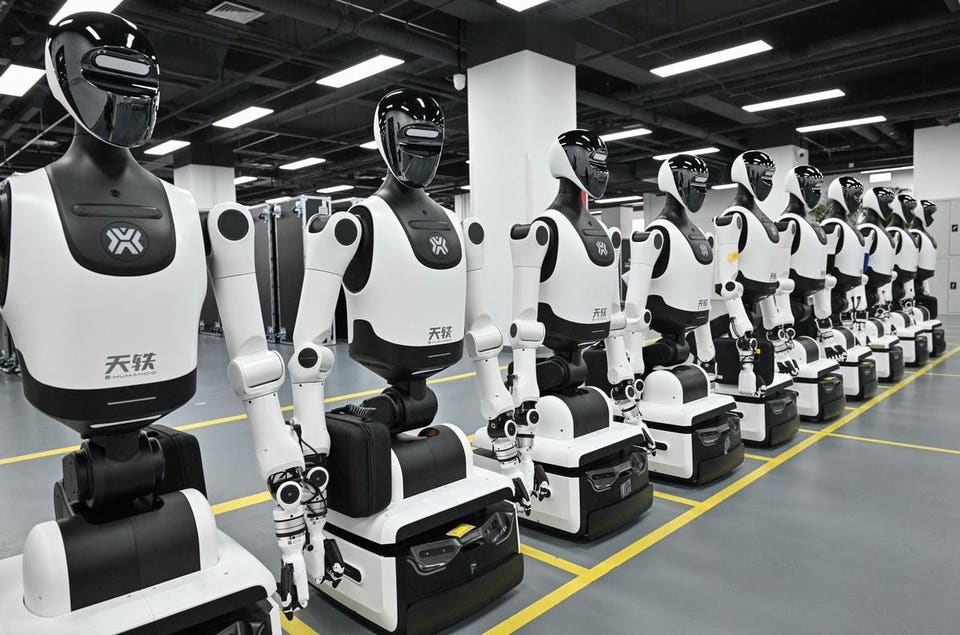
Humanoid robots in China AFP via Getty Images The Federal Communications Commission moved to block a new generation of Chinese robots from the U.S. market, adding "advanced robotic devices" such as humanoid robots and quadrupeds to its Covered List of gear deemed too risky to authorize for sale in the United States. The same order added connected power inverters, the networked devices that route electricity through solar arrays, batteries and data centers.
While not entirely unexpected — robots, like self-driving cars, are mobile sensor packages that could theoretically be used by foreign powers – FCC Chairman Brendan Carr framed the move as an economic one as well.
"Following President Trump's leadership, the FCC will continue to do our part to secure America's critical supply chains," FCC Chairman Brendan Carr said in a statement , adding that the agency was "acting in lock step with our national security agencies."
The practical effect is clear: new foreign-produced robots and inverters are now generally barred from receiving the FCC equipment authorization that nearly every electronic device needs before it can be imported, marketed or sold in the U.S. Without authorization, foreign robot makers have essentially no market access.
It’s still very early days in the humanoid robot market, but the most recent brand share data we have shows that Chinese companies are shipping more than any other, with six of the top 10 manufacturers based in China, collectively responsible for 87% of all shipped humanoid robots.
Here’s the data, from January of this year:
It’s important to remember, however, that multiple American companies are very close to shipping in volume, especially 1X with Neo, Figure with Figure 03 (and Figure 04 coming soon), Agility Robotics with Digit v4 in the market today and Digit v5 coming in December, and Apptronik with Apollo.
American humanoid robot companies. John Koetsier All of these are strong contenders, and there are many more. I’m currently tracking 180 companies in the U.S. that are working on 160 robots or components, like arms and hands. These companies have raised huge war chests totaling $150 billion.
Now these companies will have a protected market in w…