
Science When To See Two Meteor Showers Peak This Week As Perseids Intensify By Jamie Carter ,
Forbes contributors publish independent expert analyses and insights. An award-winning reporter writing about stargazing and the night sky. Follow Author Jul 30, 2026, 02:00am EDT Topline The Perseid meteor shower — one of 2026 ’ s celestial highlights — may be stealing the headlines this summer, but skywatchers have another opportunity to look up this week. Two annual meteor showers — the Southern Delta Aquariids and Alpha Capricornids — both peak overnight on Thursday, July 30, offering the chance to spot “shooting stars” and brilliant fireballs while the Perseids continue building toward their spectacular peak overnight on Aug. 12-13.
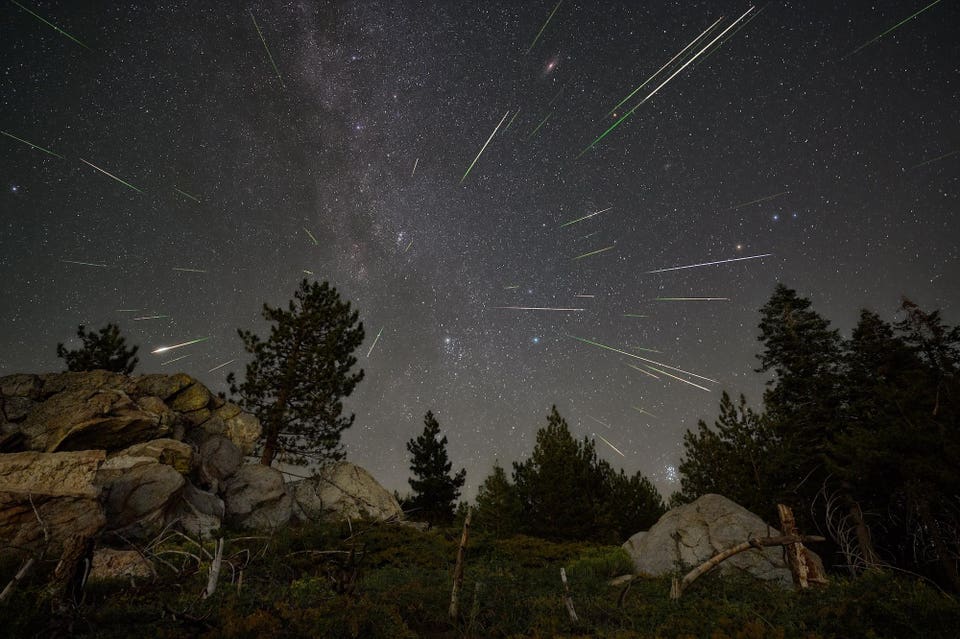
A view of the 2023 Perseid meteor shower from the southernmost part of Sequoia National Forest, near Piute Peak. NASA/Preston Dyches Key Facts The Southern Delta Aquariids and Alpha Capricornids both peak overnight on July 30-31, according to the American Meteor Society .
The Southern Delta Aquariids can produce up to 25 meteors per hour under ideal dark skies, particularly from southern latitudes. The Alpha Capricornids are much weaker, typically producing only about five meteors per hour, but they are famous for exceptionally bright, slow-moving fireballs.
A 98%-illuminated near-full Buck Moon will dominate the sky just two days after full moon, washing out many fainter meteors, though brighter meteors should still be visible.
Meanwhile, the Perseid meteor shower is already active and will continue strengthening toward its moonless peak on Aug. 12-13.
Although they peak on the same night, these showers offer very different displays. The Southern Delta Aquariids are known for producing a steady stream of relatively faint, medium-speed meteors. Observers in the Southern Hemisphere and tropical latitudes generally enjoy the best views because the radiant — the constellation Aquarius — climbs much higher in the sky. Farther north, Aquarius remains low above the southern horizon, reducing the number of visible meteors. The Alpha Capricornids are almost the opposite. They rarely produce many meteors, but those they do generate can be spectacular. The shower has earned a reputation for bright fireballs that move noticeably more slowly across the sky than the fast-moving Perseids. Their radiant point is the faint constellation Capricorn.
This year’s biggest obstacle won’t be clouds, but moonlight. The Buck Moon reached full phase just two days earlier, leaving the sky flooded with natural light during the peak. That brightness will overwhelm many of the faint Delta Aquariid meteors, leaving only the brightest examples visible. The Alpha Capricornids may fare a little better because of their tendency to produce brilliant fireballs capable of shining through the moonlight. If you do venture outside, try to position yourself so that a tree, building or hill blocks the moon from your direct view. It won’t eliminate the glare, but it can improve your chances of spotting brighter meteors. Another tactic is to turn your back to the moon.
If you trace the meteor trails of the Perseids back to their source, you will find they seem to come from a spot near the constellation Perseus - hence their name, and the name of most meteor showers. NASA/JPL The Perseid Meteor Shower Builds To A Peak The real story for many skywatchers is what comes next after the peaks of these two minor meteor showers. The Perseid meteor shower,…