
When was the last time you looked at a billboard and thought, Yep, I’m going to buy that? Probably not for a while.
Brands spend millions chasing attention online, while people are making purchasing decisions based on what someone they met on a Tuesday morning run recommended.
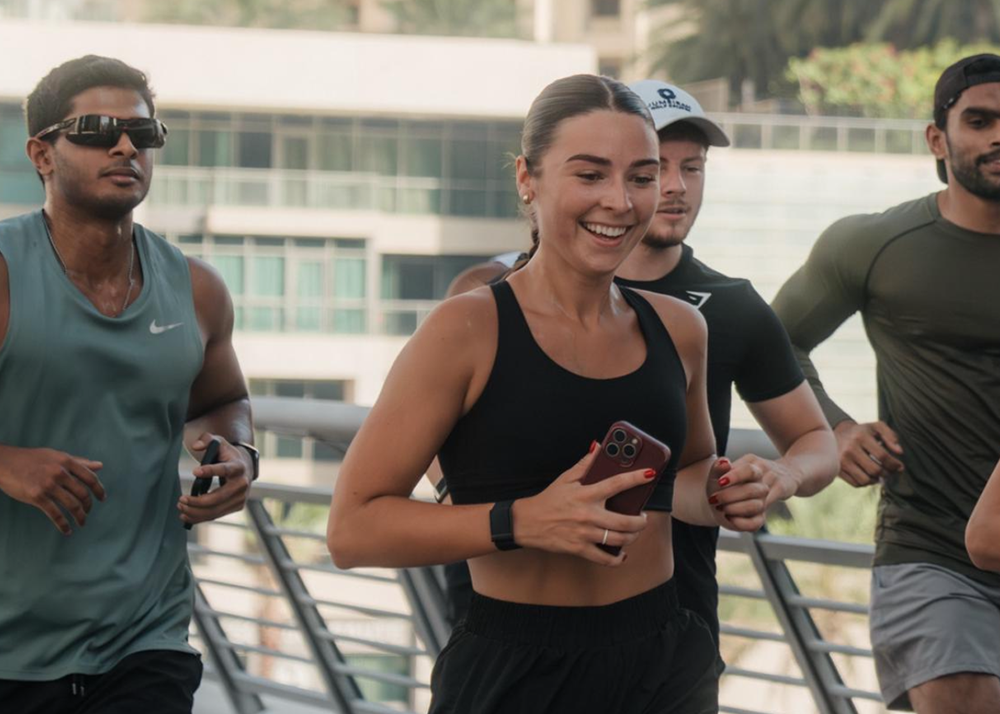
Attention used to be something you rented. Today, it works differently. Some of the most influential media channels don’t have editors, production teams, or advertising departments. They meet at 6am on Kite Beach. They wear matching T-shirts and brightly coloured nylon. They finish their runs with coffee before most people’s alarms have gone off.
They’re running clubs. And the brand opportunity is significant.
Running has transformed from a sport into a communications channel. People aren’t just running to get fit anymore. They’re running to make friends, build routines, belong to a community, and identify with a culture. And in doing so, running clubs have quietly become media channels. Better yet, authentic and rather natural ones.
At The Romans, we’ve always understood the power of community and culture. But in such a diverse and unique market like the UAE, those communities are often fragmented, digital, and difficult to trace. But that’s where run clubs offer a solution.
Think about what traditional media was designed to do. Gather audiences around a shared interest. Shape opinions. Influence behaviour. The best running clubs now do exactly the same thing.
What’s interesting is that, after decades of evolving media, we’ve arrived back at the oldest communications platform there is: community. The technology has changed, but human influence hasn’t.
People have always trusted people more than platforms. A recommendation from someone who runs half marathons every weekend carries more weight than a sponsored post. If they’re wearing a particular pair of trainers or reaching for the same protein shake after every run, chances are others will follow. That’s the power of public perception and that’s basically written on every PR job description, right?
Then there’s our increasingly fractured attention. The average person checks their phone 96 times a day, roughly once every ten minutes. Even if each glance lasts only 30 seconds, that’s almost six hours every week.
More importantly, enough time for twenty runners to discover your brand, experience it, recommend it, and post about it, without you interrupting anyone’s feed or having any number of brands do the same to you. Offer 60 minutes of uninterrupted brand engagement to any CMO and watch their knees buckle.
For an hour, people are fully present. No competing notifications. No doomscrolling. Just shared attention around a shared activity. That kind of attention is becoming incredibly rare.
Every run generates stories. Every event creates photos, videos, Strava uploads, and Instagram Reels. Community members become creators, distributors, and advocates all at once. The audience doesn’t just consume the content, they become the content.
Working with brands myself, one piece of feedback comes up time and again, “We love how natural it feels.” Not because the content is perfectly produced, but because it genuinely looks like people are enjoying themselves. And they are, believe me.
Running clubs aren’t marketing moments; they’re friendships, conversations, and shared experiences that happen to inc…