
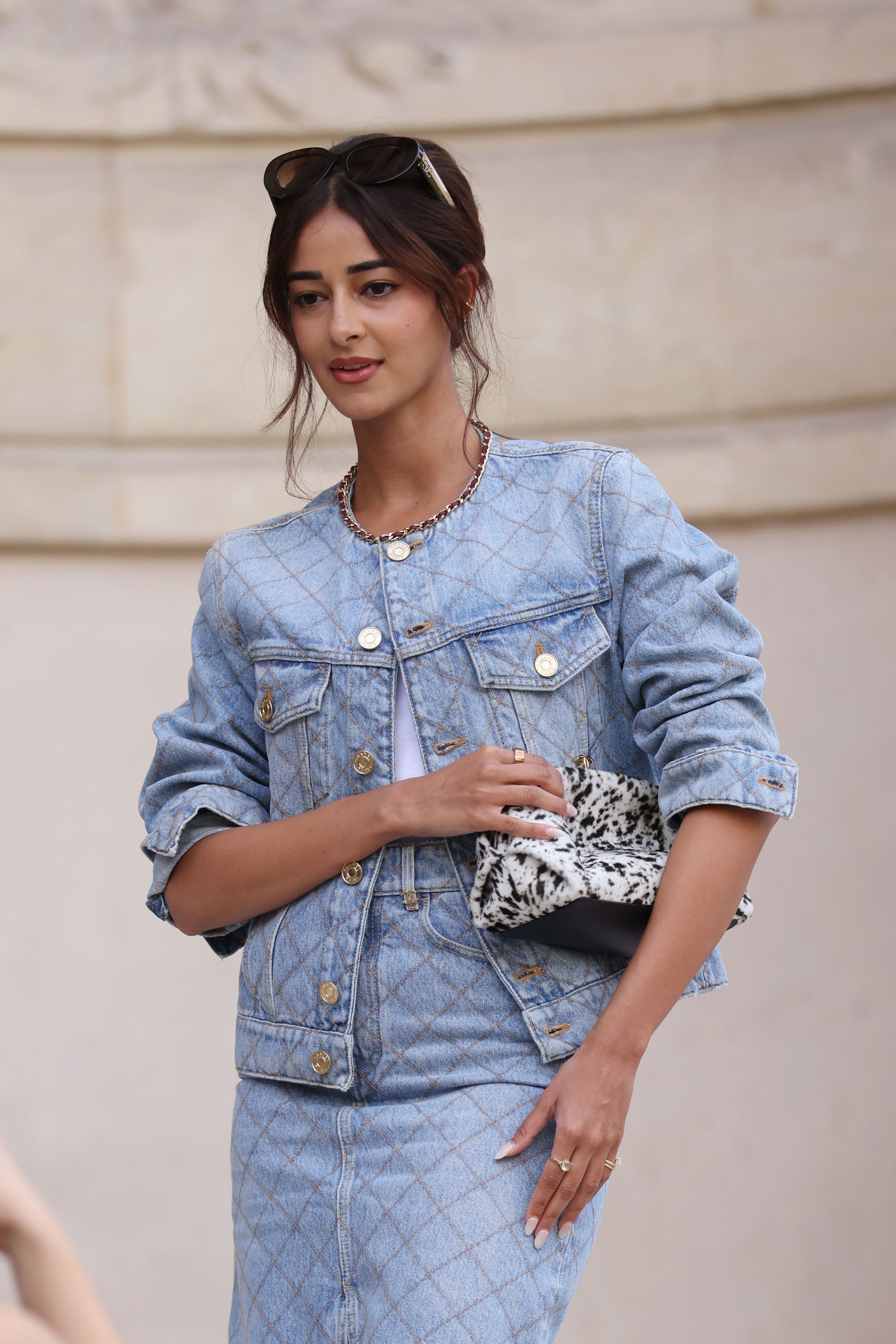
Ananya Panday, Indian actress and Gen Z fashion figure. Photo: Getty Images Save Story Save this story Save Story Save this story The recent student protests across India were a reminder of the growing influence of Gen Z in the country. The July demonstrations over exam paper leaks and job frustrations culminated in the resignation of Union Education Minister Dharmendra Pradhan on July 25, becoming one of India’s most significant youth-led movements in decades and highlighting how this generation is shaping the country’s future.
For business, it confirmed that Gen Z is no longer simply the consumer of tomorrow, but an influential force today. Pranav Goswamy, 24, a stylist, creative director and content creator, who has worked with local labels including Dhruv Kapoor and Arpita Mehta, admits he’d been misjudging his peers until recently. “While I am a Gen Z myself, I did consider them to be very laid-back, and it was something that always worried me when I was looking to hire fashion assistants,” Goswamy says. “But perhaps that was down to stereotypes. Whatever I once saw as a negative has almost turned into a positive when it comes to self-awareness and self-assurance.”
India is home to around 377 million Gen Z consumers, representing roughly 27% of the country’s population. According to a report from Boston Consulting Group and Snap, titled The $2 Trillion Opportunity: How Gen Z is Shaping the New India, the generation already influences 43% of Indian expenditure — equivalent to around $860 billion and projected to reach $2 trillion by 2035. “Gen Z still forms a smaller cohort of our customer base, but needs to be an increasingly important part of our customer acquisition strategy,” says Aria Parikh, 28, a merchandiser at Ensemble, the pioneering multi-brand retailer that works with homegrown labels founded by her family.
The recent Gen Z-led protests across India over exam paper leaks and job frustrations.
Unlike millennials, who witnessed the arrival and expansion of international luxury brands in India, Gen Z has grown up with global brands already embedded into everyday culture. They have followed fashion weeks online, discovered designers through social media and developed opinions long before they entered a luxury store. “This is the first generation of digital natives coming into the luxury world, and they come armed with more information,” says Parikh. The generation’s outlook, she adds, is shaped by a distinctly Indian context, too: a confident homegrown fashion industry where local designers command the same attention as international luxury houses.
Yet, the biggest shift Gen Z is bringing to luxury is not necessarily what they buy, but why they buy it.
The first Galeries Lafayette India store opened in Mumbai in 2024 , bringing one of the world’s best-known luxury department stores to one of the industry’s fastest-growing markets. Sathyajit Radhakrishnan, CEO of Galeries Lafayette India and International Brands at Aditya Birla Fashion and Retail Ltd (ABFRL), says that “Gen Z are looking beyond established brand names and are equally interested in a brand’s creative identity, cultural relevance, collaborations, and the story behind what they’re buying.” This is reflected in the store’s assortment, where labels such as Toteme and Erdem sit alongside Indian brands including Dhruv Kapoor, Verandah, Rkive City, and Kartik Research .
Gopal Asthana, CEO of leading e-commerce retailer Tata Cliq Luxury, purports that Gen Z is…