
on Google Preferred Source Google News Link copied to clipboard By Josh Broadwell Published Aug 12, 2026, 9:31 PM EDT FYI Combolands: Roguelike Citybuilder has one heck of a foundation
Cities: Skylines is getting some serious competition later this year 2025's most interesting co-op RPG is free for a limited time Steam 'dad gamer' FPS shoots up best sellers list after devs urge fans not to buy it Cities: Skylines meets Balatro in a frighteningly good new Steam roguelike Image: Crux Games Steam Sign in to your Polygon.com account Quite a few developers have tried to recreate LocalThunk's phenomenal success with the roguelike poker game Balatro . Some tend to overlook what makes Balatro enjoyable . Others are just flat-out unethical. Combolands: Roguelike Citybuilder from developer Crux Games isn't either of those. It takes the best parts of Balatro 's roguelike nature and combo chains and mashes them with the kind of strategic placement you need to succeed in Cities: Skylines to make something that, based on the current Steam demo, is wholly absorbing and uniquely satisfying.
Most city builders reward you for thinking strategically about adjacency bonuses (basically, a buff that's incurred by placing some things next to other things). Civilization 7 , for instance, pushes you to stack production and food bonuses so your metropoles are the biggest, richest, fastest-growing ones around. Cities: Skylines and its sequel determine how happy and ignorant your populace is based on their access to things like libraries and parks, and you can balloon the population with porridge in Anno 117 (among other things). In Combolands , adjacency bonuses are everything. Literally.
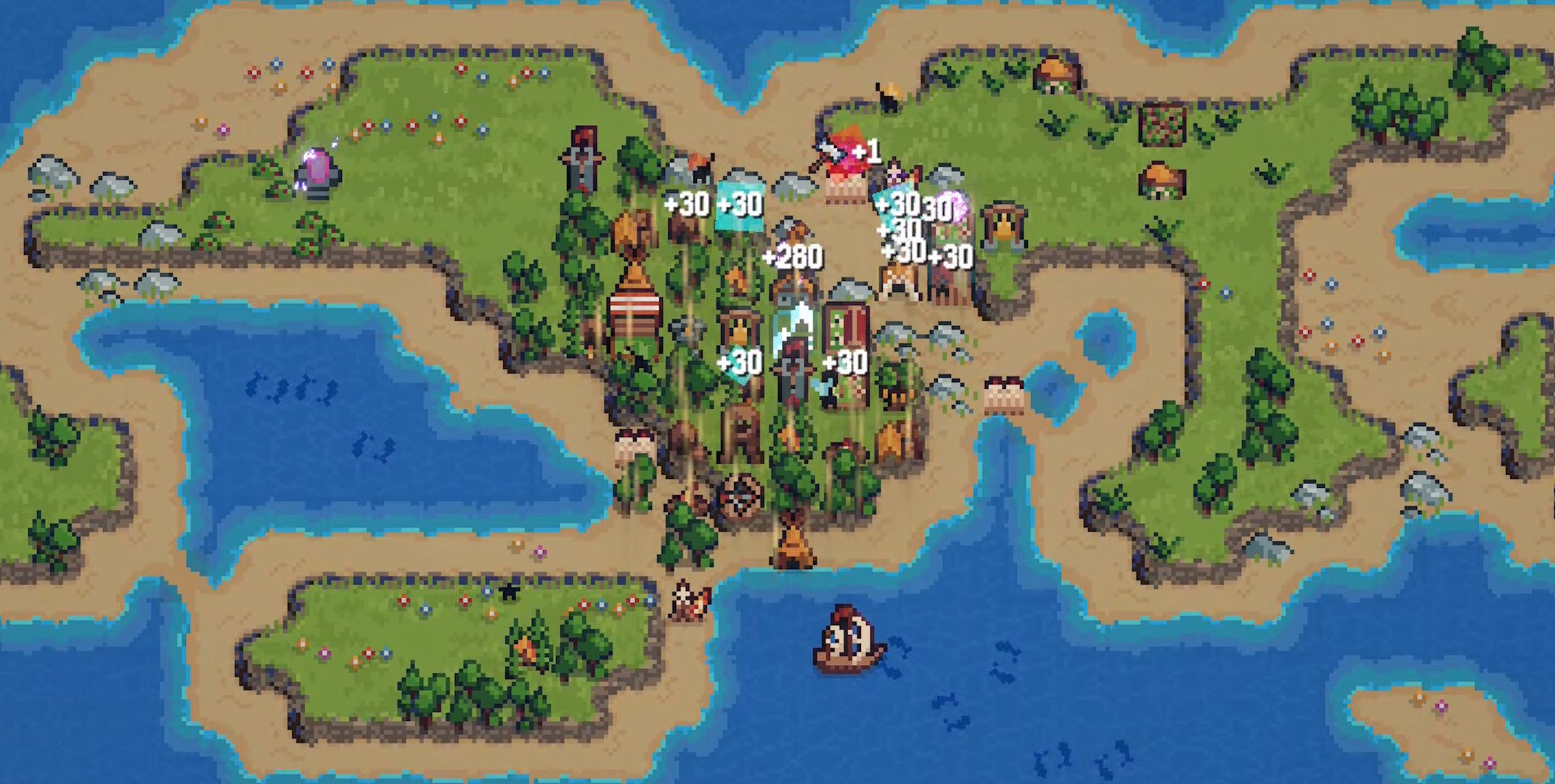
Here's how it works: You start with an island, procedurally generated at the beginning of a new run, so its structure and resource layouts are never the same. You have eight weeks to reach a new population milestone, a handful of actions available, plus a limited number of action rerolls, and each action takes one week. Your initial pool of actions is foundational, like in most city builders. You're establishing the economic backbone of your city by placing hunter's huts in forests or apiary networks near flowers. The more resource nodes your building has access to, the more your population increases every time that building's effect pops. Yes, that's not how it works in real life or serious simulators. You don't make honey and suddenly add 100 new people to your town every week. But this is video games, so we roll with it.
That's the basic idea, but complexity increases quickly. New building options show up as you reach higher population tiers that require a change in strategy. Some grant multipliers to specific productions or shorten the time it takes for a building's effect to trigger. Others benefit from proximity to a broader category, like "nature" tiles (which is anything not human-made), which seems great. So much nature! But these are more challenging to work into combo chains, and combo chains are where things really get serious.
Image: Crux Games Image: Crux Games Image: Crux Games Image: Crux Games Image: Crux Games Image: Crux Games Close Image: Crux Games Image: Crux Games Image: Crux Games Image: Crux Games Image: Crux Games Image: Crux Games Like with Balatro , the threshold you have to meet to clear each round gets increasingly higher, and the only way to clear it is by carefully planning your layout. The wanton way you placed huts and berry-…