
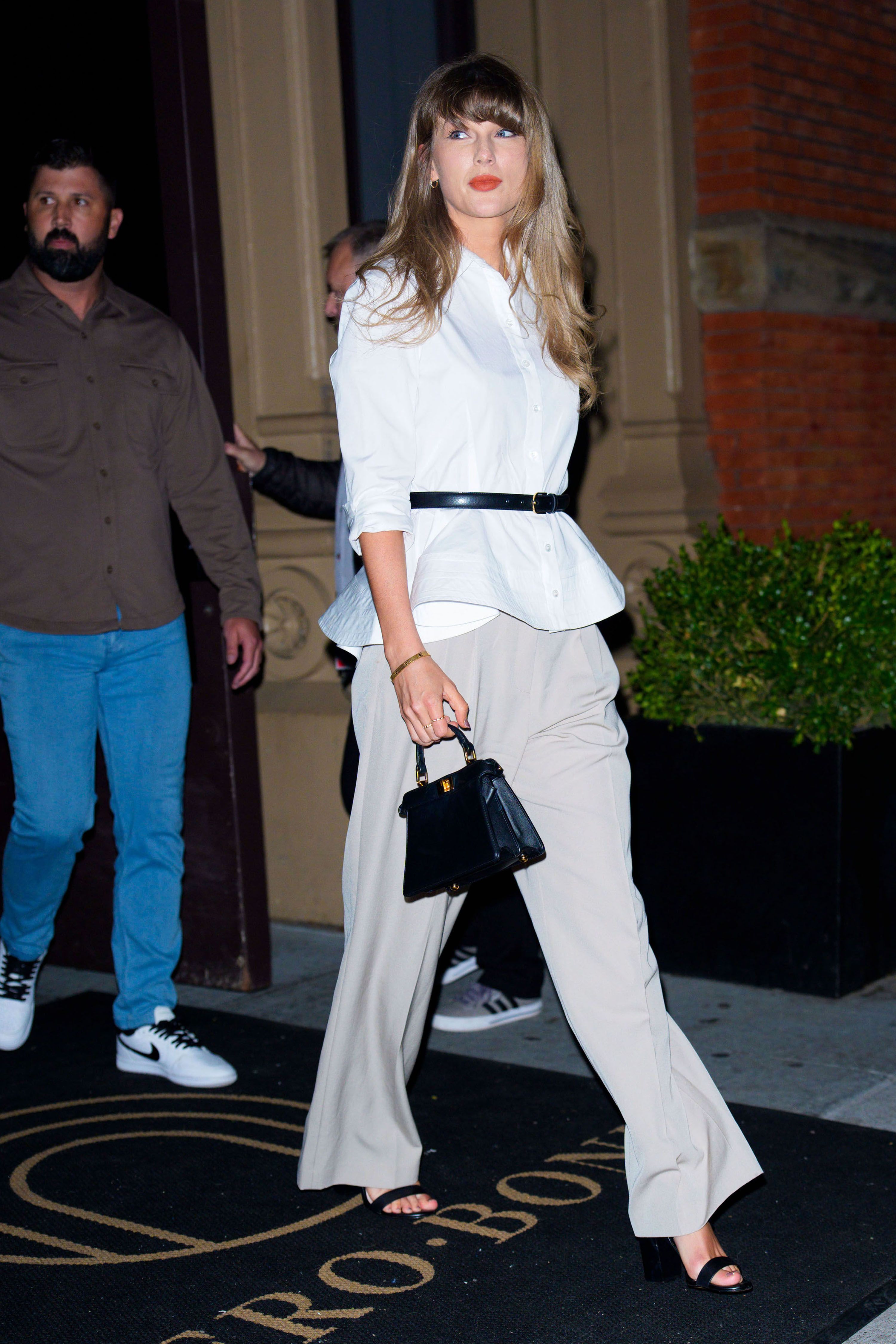
Taylor Swift is seen leaving Zero Bond private members club. Photo: Getty Images Save Story Save this story Save Story Save this story Once upon a time, if you wanted to flex on Instagram, you might post a limited-edition Supreme piece from the latest drop, maybe a Birkin, or if that was out of your price range, the right niche designer paired with Tabis could also do the trick. Status, essentially, was about what you owned.
That’s beginning to evolve. These days, posting yourself at the invite-only Alo Wellness Club, Selfridges’s newly opened 40 Duke — a space reserved for its top spenders — or even in the right area of a festival can carry more cultural cachet than any specific item.
“The objects we consume — the things we see, own, photograph, or film — simply don’t carry the same cachet they once did, regardless of what the object is,” says educator and brand strategist Eugene Healey, who recently co-founded The New Fundamentals of Brand, a course training marketers how to build brands within fragmented media, tech, and cultural environments. “Even if a product is physically scarce, it’s culturally ubiquitous. Even if almost nobody has seen a Birkin in real life, almost everyone has seen dozens of images of one.”
“It’s less about what you have or what you know, and more about who you know, and if your lifestyle accurately reflects that in a way that requires a much deeper form of entrenchment to even notice, penetrate, or belong to,” says Tariro Makoni, author of consumer publication Trademarked , on the resulting shifting ideals surrounding status.
The idea of turning access in a hierarchy is not new. Finance, travel, and retail have spent years building increasingly elaborate systems around who gets what, from airline status to credit card tiers to loyalty programs that reward customers with progressively valuable benefits. What is changing is the cultural value to those systems: access itself is becoming a status signal. The more you engage, the closer you get to something that fewer people can have, and the higher you climb, the harder it becomes to walk away. The appeal is not just the reward at the end, but the ability to get closer to a brand and to experiences that remain out of reach to everyone else.
That shift is increasingly visible in the proliferation of private members’ clubs, particularly in New York. “We’ve seen that third spaces can be replaced by members’ clubs,” says Ana Andjelic, author of The Business of Aspiration and writer of “The Sociology of Business” newsletter. “When you had a coffee shop that was accessible to everyone, it kind of shifted upstream toward members’ clubs, and that is where the certification becomes both the medium and the message. Because the club you belong to signals something about you, but you have to belong to a members’ club now.”
Outside private membership club, ZZ's Club New York.
For fashion, which has spent decades perfecting the art of making certain products and customers feel exclusive, the opportunity is obvious, but so is the risk. Could the tiered mechanics of beauty retailers and membership clubs turn exclusivity into a more scalable engine for loyalty, or does making access the new status symbol risk alienating everyone who cannot reach the top?
The most effective programs are less about handing out increasingly expensive perks and more about creating moments that feel personally relevant — whether that means securing a coveted product before everyone else, gaini…