
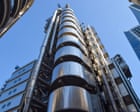
‘There was whooping in the office’ … the Lloyd's building, designed by Richard Rogers. Photograph: Vuk Valcic/SOPA Images/Rex/Shutterstock View image in fullscreen ‘There was whooping in the office’ … the Lloyd's building, designed by Richard Rogers. Photograph: Vuk Valcic/SOPA Images/Rex/Shutterstock Architecture ‘Even its loos are on the outside’: hi-tech, inside-out marvel the Lloyd’s building is partying with the public It has been likened to a monster, an oil rig – and the Parthenon. Now, for its 40th birthday, the astonishing London landmark has joined the Open House festival, to grant admirers a rare look around the inside
Alice Fisher Tue 18 Aug 2026 16.21 CEST Last modified on Wed 19 Aug 2026 00.24 CEST Share Prefer the Guardian on Google I n his 2012 book A New Kind of Bleak, the critic Owen Hatherley called it “monstrous, compelling” and utterly messed-up. Back in the 1980s, a then Prince Charles suggested it had been inspired by a North Sea oil rig. But none of this stopped it from becoming, in 2011, the youngest ever building to be given Grade I-listed status in the UK.
And now, as part of its 40th anniversary celebrations, the Lloyd’s building will open to the public for the first time since 2014 for one day only during London’s Open House festival. The iconic building in the heart of the financial district was designed by architect Richard Rogers to house the global insurance marketplace. Its futuristic facade has been a celebrated part of the City of London skyline since it opened in 1986, but the interior is rarely seen by the public. Visitor galleries with a view of the trading floor have long been shut for security reasons.
The Adam Room was sliced into 1,500 pieces and moved to Lloyd’s HQ Open House festival is organised by the charity Open City, which aims to make architecture more accessible by inviting government offices, private properties and heritage buildings to let the public in. Free tickets for the Lloyd’s building are released tomorrow for the one day the building is open, on 19 September. The tour will include the underwriting room and the Adam Room as well as examining how the building was designed. “There was whooping in the office when the Lloyd’s building came in,” says festival director Celia Mead, “because we know our visitors really, really want to get inside this landmark institution.”
View image in fullscreen Compared with the Parthenon … Lloyd’s main trading floor, with its mahogany ‘temple’ holding the Lutine Bell, rung at moments of disaster. Photograph: Jason Alden/Lloyds Lloyd’s is a key example of British hi-tech architecture. This late modernist style evolved in the 1970s and celebrates industrial engineering and prefabricated materials. Lloyd’s is famous for its exposed concrete frame and the six external steel towers that house its staircases, lifts, pipes and ducts. The building’s 12 glass lifts were the first of their kind in the UK, and each tower is permanently topped with steel cranes - partly for maintenance but also to make the building look like a gothic cathedral.
“It’s a masterpiece of radical, inside-out architecture,” says Mead, “representing London’s confidence and swagger.” From the street, she says, “it catches the attention and you wonder, ‘What could it be like inside?’” Mead has experienced the building first-hand: “My mum was an economics teacher and I joined one of her school trips to Lloyd’s 38 years ago. I remember then thinking it was huge.”
With all the infr…