
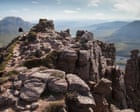
Stac Pollaidh’s ‘porcupine ridge’ summit. Photograph: Tony West Photo/Getty Images View image in fullscreen Stac Pollaidh’s ‘porcupine ridge’ summit. Photograph: Tony West Photo/Getty Images Scotland holidays ‘I came to the Highlands to give something back to the hills’: a volunteering trip in Scotland I found two days of hard graft – repairing hiking paths with a conservation trust in stunningly remote Wester Ross – a surprisingly rewarding experience
Prefer the Guardian on Google I hadn’t planned to enjoy any of this. As summer light fell on Stac Pollaidh – the summit’s teeth bared, the views stretching across the surreal emptiness of Assynt – I found myself ankle-deep in blanket bog next to a hiking path, back bent, hacking at the tough terrain with a heavy-duty mattock. Farther up the hillside, another hunched figure was cutting a deep brown scar into the moor grass and, while he worked, I stood back to look at my efforts. At my feet was a cross drain that I’d unblocked and repacked with new stonework to prevent storm damage and aid runoff from the path. A burble began to trickle, slow yet clear across the sparkling bedrock. It felt a little like appreciating a masterwork in a museum.
I’d come to Wester Ross with a bucket and spade, not for a beach break at particularly gorgeous Achmelvich or Clachtoll nearby, but with the notion of giving something back to the hills. The Outdoor Access Trust for Scotland (Oats) is a steward of many of the Highlands’ most famous mountains – developing, building and repairing paths and habitats – and I’d joined a group of volunteers for a two-day stint on the north-west Highlands’ most visited peak. Factoring in a free stay at Ullapool youth hostel and the promise of a home-cooked communal meal in return, plus an acceptable midge-free forecast, I’d driven north from Edinburgh the night before in a buoyant mood.
Oats’s purpose is to promote sustainable public access and these days that’s largely done through voluntourism, with helpers set to work lifting, resurfacing and filling pathways, yielding landscape-scale results. Iconic if traffic-heavy mountains such as An Teallach, Lochnagar and Braeriach are annual priorities, as are a throng of glens and estates from Skye to the Cairngorms. (Due to this summer’s devastating fires, some events in the north Cairngorms may be changed to a different location or postponed.) The trust’s volunteers even regularly get to work on the Lairig Ghru, arguably Britain’s most unforgiving mountain pass.
View image in fullscreen Volunteers repairing the hiking path on Stac Pollaidh It might sound like all hard graft, but it’s not. Volunteers learn new practical skills and gain awareness of mountain path design and the causes of erosion – mostly a combination of human misuse and increasing extreme weather conditions – in settings with extraordinary views. No experience is required, but volunteers must be used to spending time outdoors, have good physical fitness and be capable of using hand tools.
We started that first morning from Stac Pollaidh’s car park, a space transformed by Oats two years ago to accommodate four times more vehicles – a result of the mountain’s accessibility from the North Coast 500, which hurtles past (from Kylesku to Ullapool) only five miles east, at the end of the road. But everyone comes with the same motivation. As we climbed the open moorland, Assynt’s surrounding sea of lochans (small lochs) sparkled. Stac Pollaidh’s summit, to the north,…