
Photo: Death to Stock Save Story Save this story Save Story Save this story When French fashion house Mugler launched its first-ever handbag in June, it did so with a bold campaign. In it, Tatiana Horslaville, a female bodybuilder, was photographed naked — the lighting casting exquisite shadows across her sculpted physique, which rippled with muscle, tissue and veins. Her arms flexed as she carried the black, rectangular Aurora bag, imitating an outer dumbbell curl. It was disarming and disruptive, especially for an industry where size inclusivity is clearly treated as a passing trend .
For Adrian Corsin, Mugler’s managing director, the rarity of this physique in women’s fashion brought something “fresh” in a sea of sameness. “A muscular femininity feels new in a world dominated with important discourse about body positivity, peptides, and overall health,” he says. The main character of the campaign was not the bag, but the body.
It’s not the first time fashion has honed in on women’s muscles. From Robert Mapplethorpe’s photography of ’80s bodybuilder Lisa Lyon to Collina Strada’s Fall/Winter 2024 “Stronger” runway show , featuring muscular, athletic models, there have been some rare examples through the years. Daniel Roseberry at Schiaparelli also took inspiration from a built physique for his 2021 couture collection, where abs and deltoids turned into surrealist architecture on evening gowns, while Cara Delevingne wore a Thom Browne dress embellished with beads that mimicked muscle and tissue to the Oscars in February.
But Mugler’s recent campaign hit at a critical moment in the cultural body conversation. The rise of GLP-1s has made thinness more accessible, while users of the drugs are being advised to up their protein intake and strength train two to three times per week to preserve muscle mass as they lose fat. This all means even more people are finding themselves in the gym.
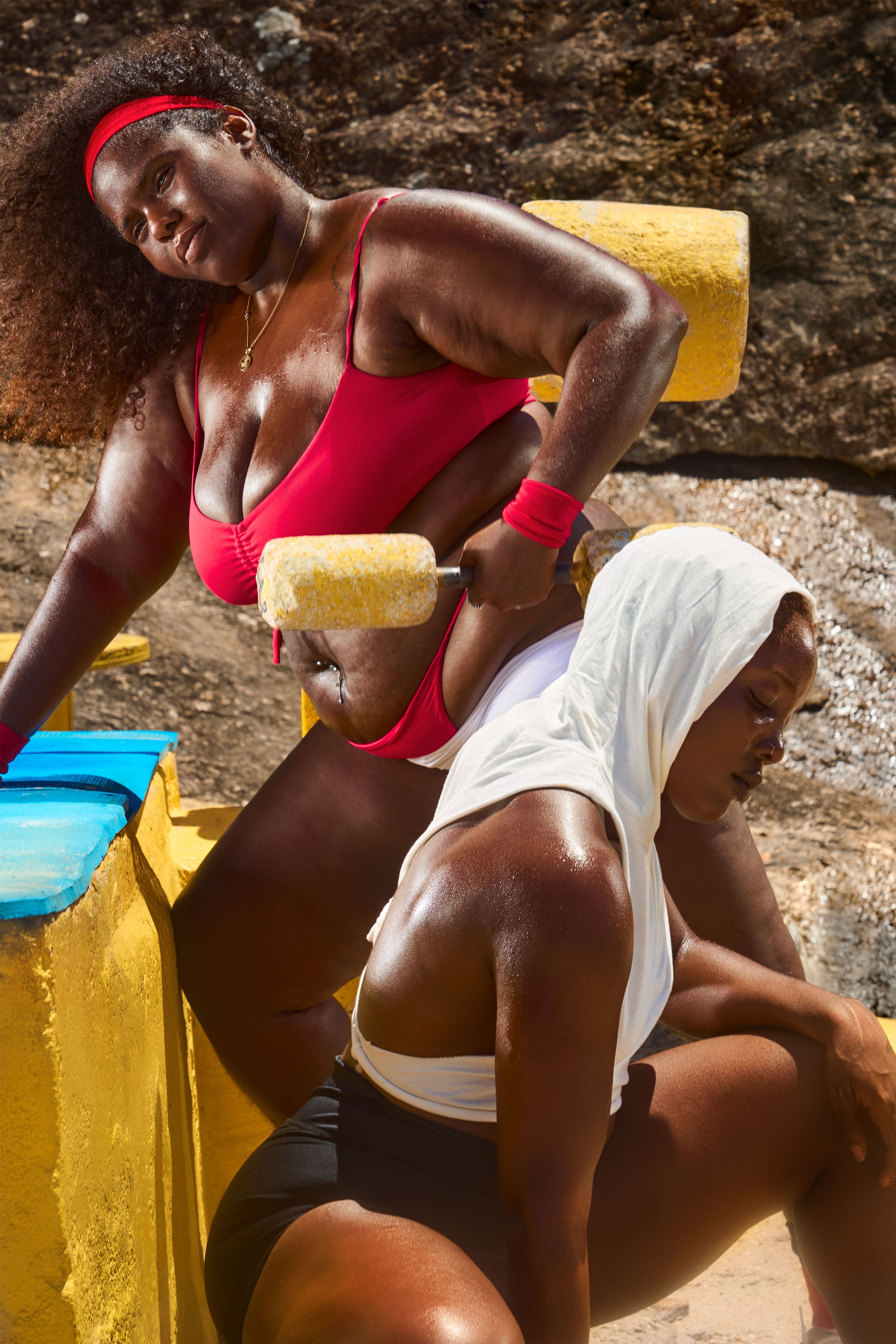
While for men, building (and showing off) muscle is an increasingly complicated subject, owing to its association with looksmaxxers , muscle for women is being reframed. And even beyond GLP-1 users, the “strong not skinny” movement on social media, the growth of gym-based fitness competition Hyrox and stars like Hailey Bieber swapping the reformer machine for weights is attracting a whole new generation of women to the weight rack.
“All these conversations are happening at the same time, digitally and in real life,” says Dany Garcia, a former professional bodybuilder and founder of Danimás, a New York-based women’s luxury brand based on strength training, which launched last year. “In the past one to two years in culture, there has been a swirl [of interest] around strength, leading to a crest in culture. It’s a real moment in time.”
The stats back this up. Data from Oura, revealed a 160% year-on-year increase in women tagging strength training workouts in June. On Strava, the social fitness app, women are 21% more likely to upload a strength or weight training workout than men, according to its 2025 Sport Trend report. Luxury gyms like Third Space are seeing a rising demand for women’s strength, with Caroline Bragg, a Third Space master Pilates trainer based in London, reporting a 20% uptick in women attending strength and conditioning classes this past year.
If strength is becoming a status symbol, then weights are the new visual cue. Celine launched a dumbbell last year, while Balenciaga’s fitness collection launched with a pop-up in Paris, designe…