
All eyes will be on the United States, Canada, and Mexico on Thursday for the kickoff of the 2026 World Cup, but the tournament that the FIFA describes as the largest in history reaches the starting line amid a series of legal, political, and organizational issues that have emerged in recent days.
Amid repeated visits by FIFA President Gianni Infantino to the White House and the criminal lawsuit filed by Frenchman Michel Platini in French courts, and the crisis of Somali referee Omar Abdul Qadir Artan being denied entry to the United States, and the ongoing debate about visas, ticket prices, and playing conditions, FIFA finds itself facing challenges that go beyond the green rectangle before the kickoff of the first edition of the World Cup with the participation of 48 teams.
Infantino renewed during a new visit to the White House and his meeting with U.S. President Donald Trump his assertion that the United States is ready to welcome the world, after having previously announced during a prior visit last week that the host country is ready to organize the tournament, which will last until July 19.
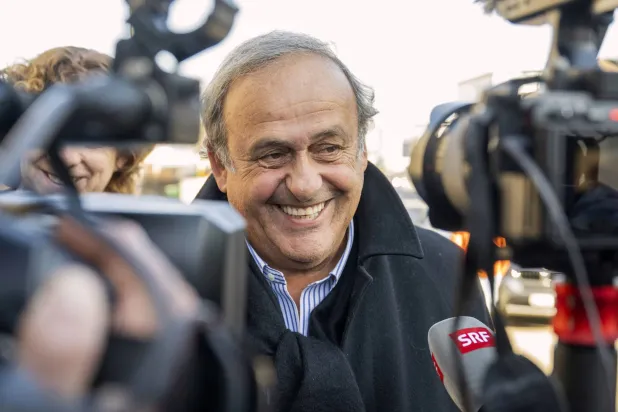
However, one of the first issues to surface was the criminal lawsuit filed by Frenchman Michel Platini, the former president of UEFA, against Infantino in France. Platini claims that Infantino and others conspired to exclude him from the FIFA presidential race in 2016, after he was suspended along with the former FIFA president Joseph Blatter from any football activity during investigations conducted by FIFA at the time, although the Swiss judiciary later cleared the two men.
The case brought back to the forefront the struggle that accompanied the transition of power in FIFA nearly a decade ago, and put Infantino once again in front of questions concerning his administrative past at a time when he preferred to focus on the upcoming tournament.
At the same time, the close relationship between Infantino and U.S. President Donald Trump continues to spark widespread debate. Trump has previously announced that he will present the World Cup trophy to the winning team in the final match scheduled in New Jersey, and the U.S. president received the FIFA Peace Prize during the tournament's draw in Washington late last year, in a step that critics deemed additional evidence of the robustness of the relationship between the two parties.
The cooperation extended to FIFA announcing a partnership with Trump's Peace Council. While the FIFA president insists that building good relationships with host governments is essential for ensuring the success of major tournaments, critical voices see that the relationship has exceeded the usual institutional cooperation limits.
Infantino's visits to Trump at the White House have become a topic of media controversy.
But the most sensitive crisis in recent days has been the issue of visas and entering the United States. Somali international referee Omar Abdul Qadir Artan was denied entry to the U.S. even though he was selected as one of the referees for the World Cup, depriving him of a historical opportunity that would have made him the first Somali referee to oversee matches in the World Cup finals.
The decision sparked widespread reactions within Somalia, as the Ministry of Sports quickly issued a statement affirming its full support for the referee and its confidence in his integrity and professionalism and his continuous contribution to the development of football both inside and outside the country.
According to available information, Artan faced a sudden shock upon arriving at Miami International Airport, where he underwent additional security checks before being denied entry and returned to Turkey, confirming his absence from the tournament.
In an official response to an inquiry from Asharq Al-Awsat, FIFA confirmed that it is not a party to the immigration procedures of host countries, including decisions regarding visa applications or permitting entry.
FIFA explained that U.S. authorities informed it that the legal status of the Somali referee will not change at the present time, indicating that the hosting government is the one that has the final decision on granting visas and allowing individuals to enter its territory, as has been the case in previous tournaments.
For its part, the U.S. Customs and Border Protection explained that the referee underwent additional routine checks as part of information verification and eligibility determination procedures before the authorities decided to deny his entry due to concerns related to security checks.
The Artan case was not the only visa-related case. The Iranian Football Federation announced that 15 officials did not receive entry visas, and it was also clarified that the Iranian team residing in Mexico would not be allowed to enter the U.S. except on match days, having to leave on the same day.
The sensitivity of the file increases due to Iran's inclusion on the list of countries subject to the U.S. travel ban, as well as the ongoing political and military tensions between the two countries. The International Sports Press Association also announced that several Iranian reporters and journalists from other African countries encountered difficulties in obtaining visas or received restricted visas. The head of the association, Gianni Merlo, described these cases as "unacceptable," calling on FIFA to intervene to address the issue.
Children watching the German national team's training in Winston.
On another note, ticket prices continue to be met with severe dissatisfaction among fans. Criticism is focused on high prices, the lack of low-cost tickets, and the reliance on a dynamic pricing system that connects prices to the level of demand, in addition to the growing secondary market that has seen tickets sold at exorbitant prices.
The controversy has exceeded the limits of public criticism, as FIFA is undergoing a criminal investigation in two U.S. states over accusations related to raising prices by restricting supply and altering ticket classes. The European Football Fan Association also filed a formal complaint with the European Commission accusing FIFA of exploiting its monopolistic position to impose high prices and unfair, ambiguous purchasing conditions.