
Police and Crime Commissioner for Hampshire and the Isle of Wight , Donna Jones has called for the Government to take further action on illegally modified car and motorcycle exhausts .
Making a statement on Wednesday, August 12, The Commissioner has now launched an online survey encouraging local residents to share their experience of the issue – with responses being taken until Tuesday, September 1.
“The noise caused by these modified motorbikes and cars is unacceptable and unbearable for many,” Jones said. “Countless people have told me how the constant racket is affecting their ability to enjoy their homes and get a decent night’s sleep.
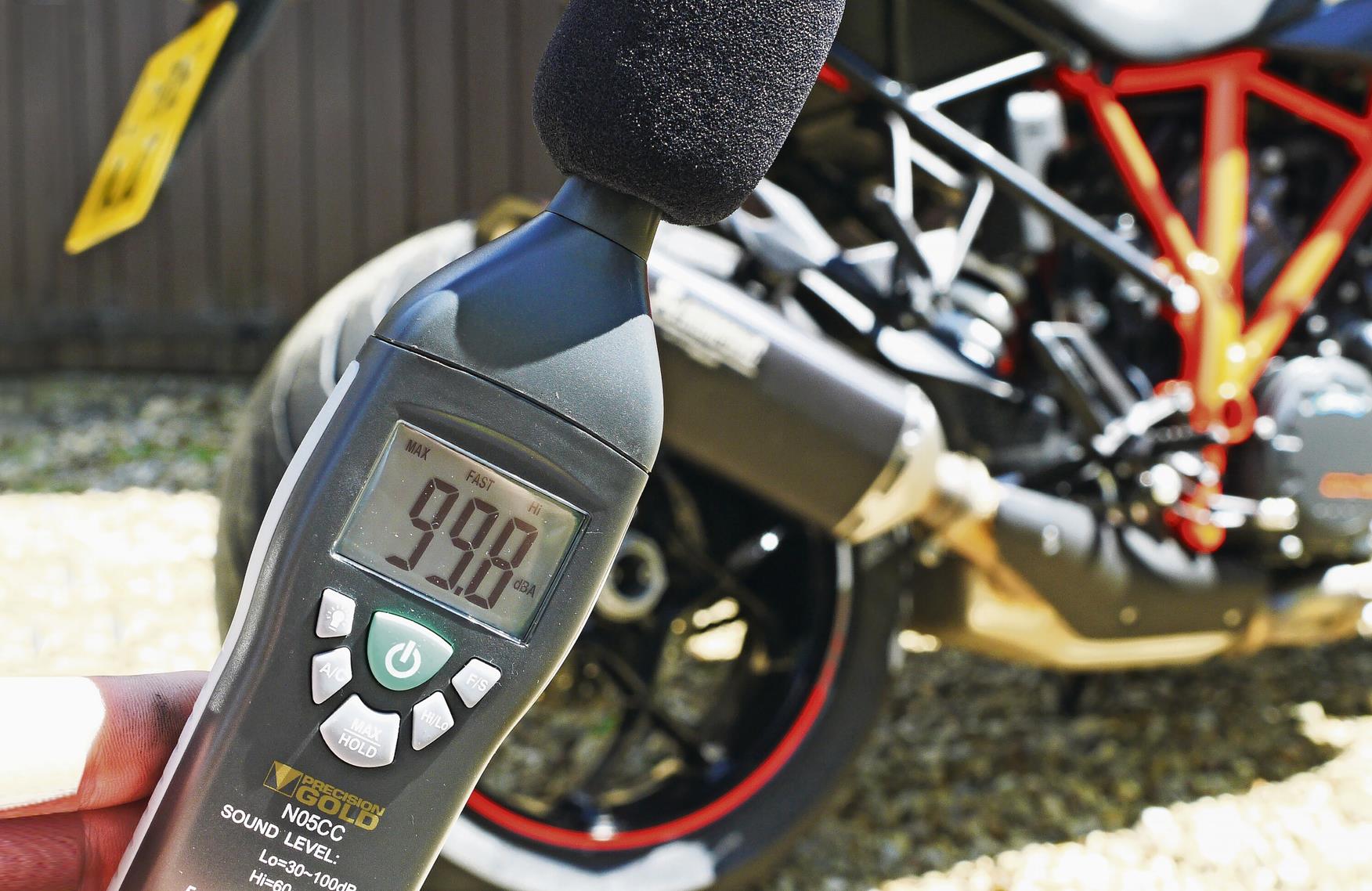
“A lack of clarity from government is making enforcement difficult and inconsistent. It’s why ministers need to give police forces an objective and enforceable decibel limit alongside standardised noise-measurement equipment.”
The maximum sound limit for a new Euro5+ compliant motorcycle depends on its power-to-weight ratio, however most category A licence machines will need to achieve a maximum of 77dB(A). The lowest power machines come in at 73dB(A) – with bikes assessed by passing between two microphones at 50kph (31mph) spaced 15 metres apart during testing.
When it gets to MoT time , providing the exhaust in question is legal for road use – it is actually down to the discretion of the tester as to whether or not it’s too loud.
Official government guidelines state that where possible, a tester should rev the bike to half engine speed once warm and check that “the noise emitted from the motorcycle is not clearly unreasonably above the level expected from a similar motorcycle with a standard silencer in average condition.”
Those currently stopped and found to be in breach of the rules could receive a verbal warning, or £50 fine.
The Commissioner now wants to see the rollout of a national decibel limit, as well as noise cameras to identify those in breach of the rules.
“The DfT’s (Department for Transport) 2022 noise camera trials demonstrated that acoustic camera technology can successfully identify vehicles generating excessive noise,” Jones added. “The technology exists. What is now needed is the policy framework and legislative backing to enable it to be used effectively.
“Having a set roadside decibel limit and clear national guidance will not only help police and local authorities collect better evidence, but it will also act as a strong deterrent against illegal modification and anti-social motorists.
“Drivers and riders need to understand the rules and consequences. That comes from education and proper enforcement.”
It only takes a couple of minutes at your local bike meet to realise that aftermarket exhausts are still popular amongst riders in the UK. That said, there’s a fine line between a nice sound and excessive noise – with the latter likely to lead to more calls like this in the future.
Dan is a fully-trained journalist, with a Gold Standard Level 3 Diploma from the National Council for the Training of Journalists. He has a passion for motorcycles of all capacities, but feels at home aboard a sportsbike. He's been working for MCN in print and digital for the best part of 10 years, with regular contributions to RiDE Magazine on the side.
News Editor, trackday fan, lover of 90s sportsbikes