
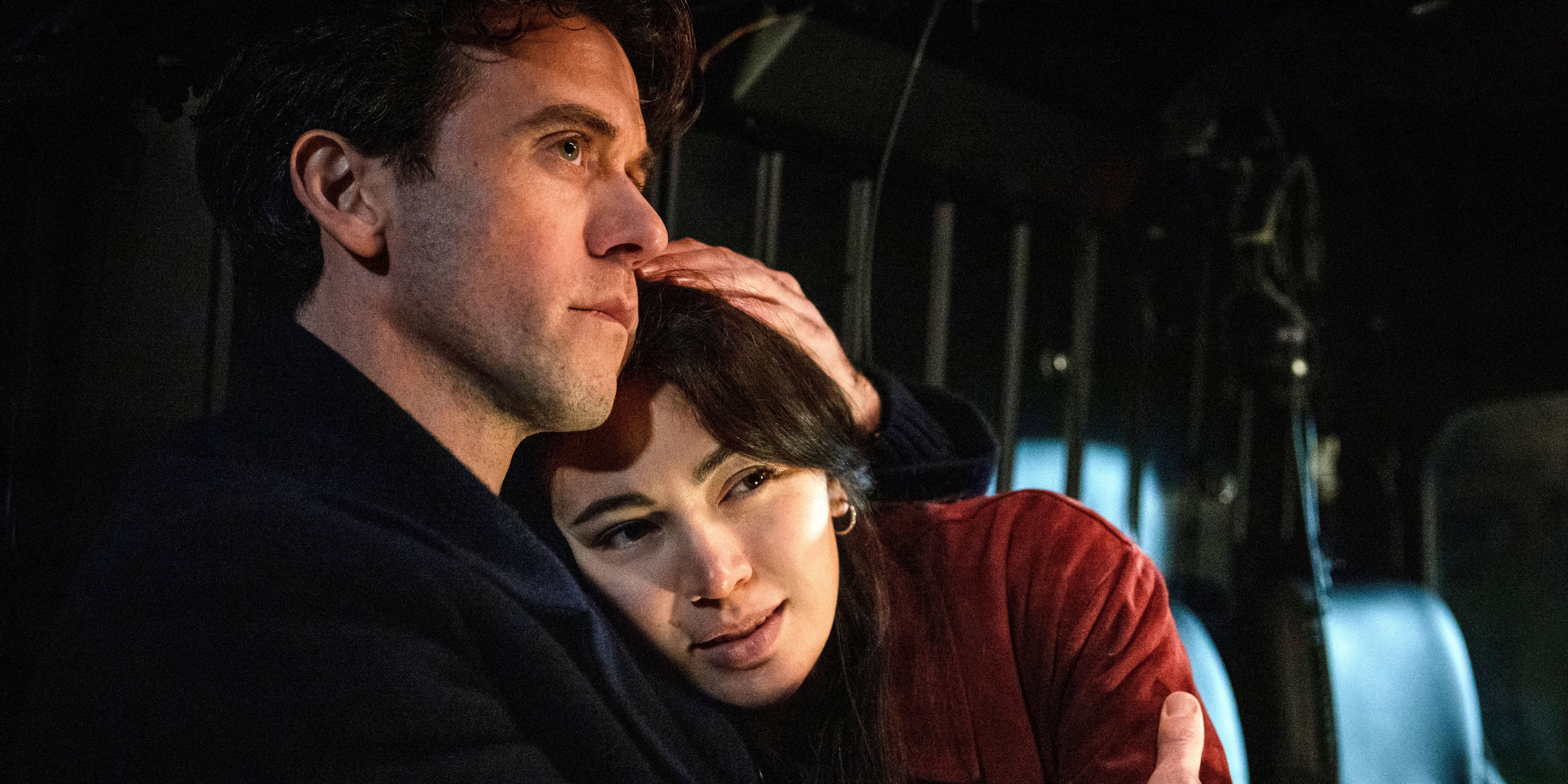
Ashley Zukerman as Daniel Keene and Jessica Henwick as Helen Drew in Silo Season 3. Image via Apple TV By Chelsea Adelaine Hassler Published Aug 23, 2026, 12:13 AM EDT Chelsea Adelaine Hassler is an award-winning editorial, social, and creative director with two decades of media and entertainment experience and an all-consuming obsession with TV. A native New Yorker, she always completes the Sunday crossword, reads at least 100 books per year, and has Knicks season tickets. Sign in to your Collider account Add Us Add on Google Preferred Source Google News Like Like follow Follow followed Followed Listen Thread Log in Here is a fact-based summary of the story contents: Try something different: Show me the facts Explain it like I’m 5 Give me a lighthearted recap Editor's note: The following contains spoilers for Silo Season 3, Episode 8. After three seasons of methodical world-building and carefully guarded truths, Silo finally pulled back the curtain on the slow-burn mystery at its core. To reveal the hard facts about the creation of the silos and the end of the modern world, the show switched to a dual-timeline structure for its penultimate season, jumping between the escalating existential threats faced by Juliette Nichols ( Rebecca Ferguson ) and Silo 18 in the present, and Congressman Daniel Keene ( Ashley Zukerman ) and investigative reporter Helen Drew ( Jessica Henwick ) as they chased a wide-ranging conspiracy more than 300 years in the past. In Episode 8, the "before times" storyline delivered a long-awaited end-of-the-world reveal , one that reframed the apocalypse as something far more original than nuclear war but also turned the world beyond the present-day silos into an active, ongoing threat that could reshape the series from here on out.
Initially introduced as an enigma, the outside world was either believed to be a deadly wasteland or a lush oasis , depending on which set of silo-generated visuals you chose to buy into. After Juliette's round-trip journey to Silo 17 , she became the first human observer of the hostile, barren dystopia forewarned in the silo's governing lore, earning her a figurehead position as mayor and a heavy dose of memory-wiping pills that prevented her from sharing anything else she'd learned about the outside world. After being freed at the halfway point of the third season, an unexpected group of allies bands together to try and disable the mechanism for the Safeguard Procedure that allows for a silo to be eliminated at any time – but as it turns out, the biggest threat to Silo 18's continued survival might not be Vitamin D+ in the water or toxic gas in the air supply , but the nanobot technology that led to the silos to be built in the first place.
Rebecca Ferguson as Juliette Nichols and Tim Robbins as Bernard Holland in Silo Season 3. Image via Apple TV The fall of humanity, we learn from trillionaire Per Stenson ( Colin Hanks ), will not be brought about by nuclear weapons but ushered in by cheap self-replicating nanobots that aren't just built to kill humans but set on reducing all organic matter on the planet to a pile of "gray goo." For the better part of its three seasons, Silo let viewers settle into the comfortable assumption that the silos were built to survive nuclear warfare , a fact never confirmed but ascertained in part due to artfully delivered breadcrumbs – a "dirty bomb" in the nation's capital, the toxic atmosphere above the silos, the need to live so far below ground – tha…