
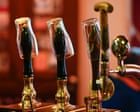
‘We have heard of pubs taking off independent beers because they are too popular,’ Camra’s chief executive said. Photograph: Christopher Furlong/Getty Images View image in fullscreen ‘We have heard of pubs taking off independent beers because they are too popular,’ Camra’s chief executive said. Photograph: Christopher Furlong/Getty Images Pubs Problems brewing for the proper pint as Camra membership falls Cost of living has hit campaign group while multinationals are threatening to squeeze out independent breweries
Helena Horton Mon 24 Aug 2026 19.01 CEST Last modified on Mon 24 Aug 2026 21.22 CEST Share Prefer the Guardian on Google F or centuries, the wooden real ale pump has been the hallmark of a good British boozer. But now problems are brewing for the proper pint, as the Campaign for Real Ale has seen its membership sink to an eight-year low and its accounts show it is firmly in the red, making an £800,000 loss last year.
Real ale is a traditional draught cask beer, a “living” product that is produced and stored in its cask. It differs from a cold, fizzy lager, in which the yeast is killed and carbon dioxide is added. Real ale contains live yeast so it continues fermenting until it is served.
Outside the Devonshire pub in Soho, central London, there is an ever-present horde of drinkers downing pints of Guinness, a stout made by the multinational company Diageo. But the landlord and co-owner Oisín Rogers says: “Real ale is all I drink.”
He says: “It is a properly handmade British product produced in exactly the same way it has been for centuries. It has never been industrialised like some of the other drinks that are for sale in bars in London.” His favourite tipple, is, appropriately, a pint of Landlord, made by the family-owned Timothy Taylor brewery in Keighley, West Yorkshire.
View image in fullscreen The Devonshire pub in London’s West End. Photograph: Mike Kemp/In Pictures/Getty Images Tom Stainer, Camra’s chief executive, says independent breweries are facing unfair competition from multinationals. If you walk into a pub on the high street, you are often confronted with the same few beers, most of which are made by the same large companies, Stainer says.
“Our recent beer report highlighted that the beers people want aren’t available in bars because of the ways the huge international brewers operate – they have a stranglehold on the industry,” he says. “We call it an illusion of choice – a lot of people walk into bars and don’t realise everything in front of them is owned by the same big company.”
Read more He says these “big global brewers who have deep pockets and huge influence” make it “hard for small brewers to get to market”. The incentives offered to large pub companies include cheap packages for beers, wine and soft drinks, with a multi-year tie-in, and minimum purchase orders where “pubs are forced to sell a certain amount of this product”.
Stainer adds: “We have heard of pubs taking off independent beers because they are too popular and stop people buying that product they have a minimum purchase order for.”
Camra is calling for the Competition and Markets Authority to investigate the big beer companies’ stranglehold on the market.
There are no such problems at the King Charles I pub in King’s Cross. As an independent, community-owned venue, the team can choose what’s on tap. They have a healthy range of cask beers, swapped out every five weeks.
Matt Roberts, the manager, says: “I like to choose local bee…