
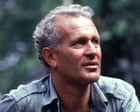
‘I hate being pigeonholed, and I like to do the unexpected’: John Irvin, pictured in 1986. Photograph: Alex Bowie/Getty Images View image in fullscreen ‘I hate being pigeonholed, and I like to do the unexpected’: John Irvin, pictured in 1986. Photograph: Alex Bowie/Getty Images Film Obituary John Irvin obituary British film-maker and director of Tinker Tailor Soldier Spy who was described by Alec Guinness as having ‘balls behind the camera’
Prefer the Guardian on Google Bouncing from war zone reportage to cold war espionage, Hollywood horror to Sherwood Forest swashbuckler, Harold Pinter to Arnold Schwarzenegger, the director John Irvin, who has died aged 86, was nothing if not eclectic.
“I’m a bit split,” he said. “I like playing with expensive toys, yet I also like the miniatures. I hate being pigeonholed, and I like to do the unexpected.”
He enjoyed his greatest success with the BBC mini-series Tinker Tailor Soldier Spy (1979), adapted from John le Carré ’s novel about the intelligence officer George Smiley’s efforts to winkle out a Russian mole. Smiley was played with clenched elegance and economy by the formidable Alec Guinness , who took to striking out lines in the script whenever he felt he could convey the necessary information by expression alone.
“I was terrified, knowing I had to spend a year with him,” Irvin told Guinness’s biographer Piers Paul Read. On the first day of rehearsals, the director offered a suggestion that was rejected out of hand. After persuading Guinness to try the scene his way, Irvin was vindicated. “Very good, John,” the actor said. “Ten out of ten.”
There was still Guinness’s trepidation to contend with. Phoning Irvin at 3am once shooting was under way, the actor fretted that he “hadn’t found Smiley” and recommended that the part be recast. On set a few hours later, Guinness walked off in the middle of filming. Irvin brought him back and stood his ground. “We’re going to do it in one take,” he said of the day’s first scene. “Do you understand?”
When Guinness was later asked what he liked about Irvin’s directing style, he said: “Balls behind the camera.”
View image in fullscreen Alec Guinness in Tinker Tailor Soldier Spy, 1979. Photograph: Maximum Film/Alamy The series, described by its producer Jonathan Powell as “a sort of elegy for empire”, was seen at its peak by more than 8 million viewers (more than 15% of the UK population) and won several prizes, including best drama series in the Broadcasting Press Guild awards.
Interviewing the director in 1986 for Films in Review, Louise Tanner wrote: “There is about Irvin just a hint of a Le Carré hero, the crisp diction, the quiet air of knowing his way around the lands east of Suez.”
Irvin was unavailable to direct the follow-up, Smiley’s People, having been courted by Hollywood since before Tinker Tailor Soldier Spy. His 1977 Granada Television adaptation of Dickens’ Hard Times had impressed executives there.
From moles, he moved on to dogs: The Dogs of War (1980), that is, adapted from Frederick Forsyth ’s novel and starring Christopher Walken as a mercenary helping to overthrow a west African dictator. Stark and uncompromising, the film was hated by Forsyth.
Apparitions were next. Ghost Story (1981) featured an illustrious cast who were famous before Irvin was even born: Fred Astaire, Melvyn Douglas, John Houseman and Douglas Fairbanks Jr played friends harbouring a nasty secret. The New England winter was scarier than any of the film’s spect…