
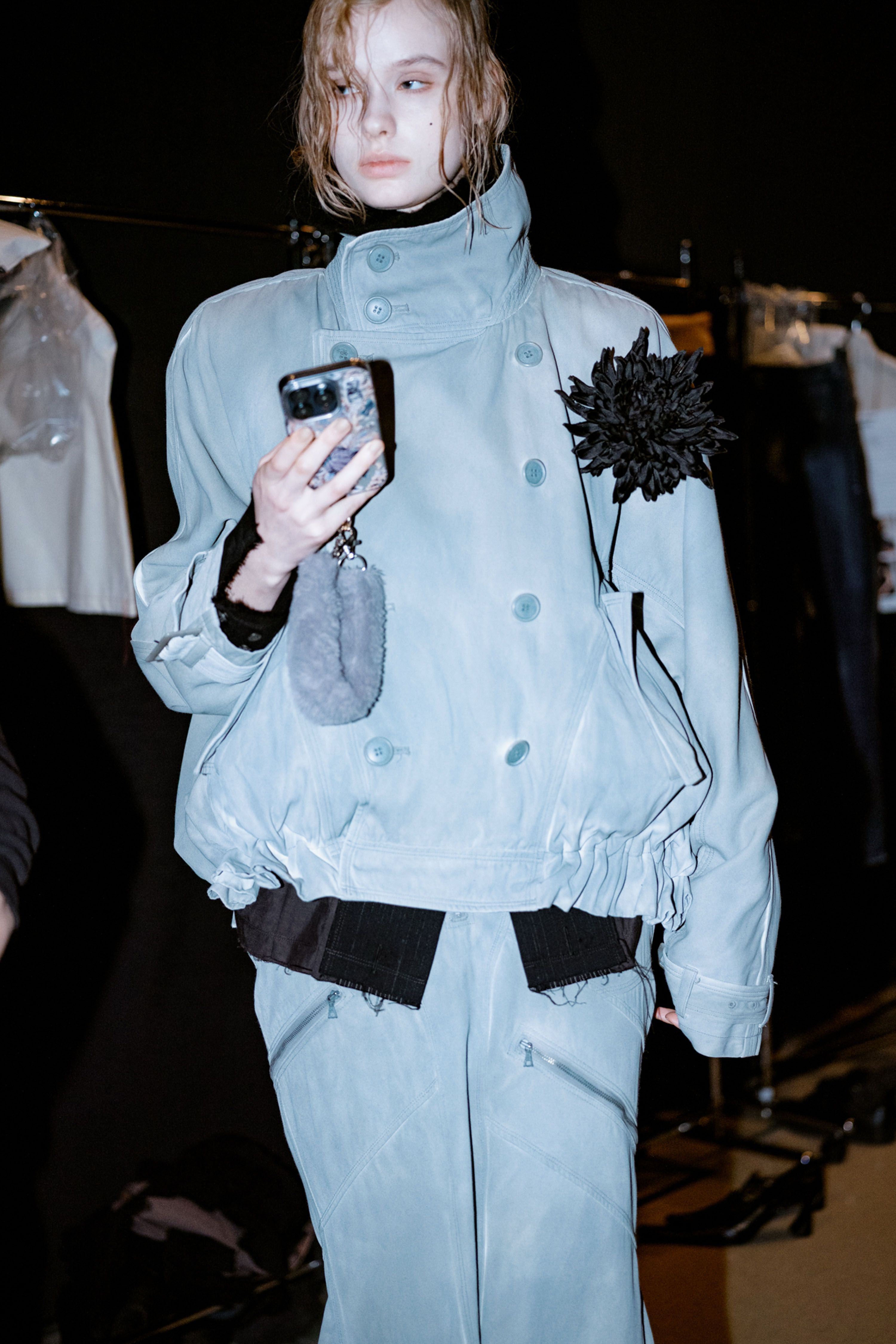
Mukcyen FW26. Photo: Courtesy of Mukcyen Save Story Save this story Save Story Save this story Japan’s fashion industry is enjoying a global moment. An influx of tourism into the country buoyed by the weak yen has coincided with a booming cultural interest in Japanese fashion. The country has produced three winners of the LVMH Prize in the past decade, and with the success of recent menswear exports like Auralee and Ssstein breaking through on the Paris schedule, more names are on the way.
But for the country’s emerging designers, harnessing that international interest has its fair share of obstacles. What does it take to build a global fashion business from Japan today? Five designers weigh in below.
Designer: Viviano Sue Founded: 2014 Category: Womenswear and menswear
Background: Growing up between the US and China, Viviano Sue first moved to Tokyo to study at Bunka Fashion College. His eponymous brand trades in statement dresses and tailoring with unapologetic flounce, and in 2024 launched a menswear line. Worn by the likes of Lady Gaga, Bad Bunny, and Hudson Williams , Viviano’s recent strategy has targeted Hollywood.
“Starting my own brand in Japan as a foreign designer definitely wasn’t the easiest route. I’d never worked for another fashion house before either, so I didn’t come with an established name or background that people immediately recognized. Japan is also a society where fitting in can be quite difficult, so being a foreign designer running an independent label naturally made me a bit of an outsider. Still, I approach things from a slightly different perspective, and I’ve always had a very international circle around me. So as the brand has become more international, that has definitely helped.
Before taking our showroom to Paris, we felt needed to build more international awareness, so started working with a PR agency in LA. Initially, we focused quite heavily on magazines and traditional fashion media, but the results were quite limited, so we decided to shift more of our attention toward celebrity dressing. And that really changed things for us. What I learned is that making good clothes is only one part of it. You also need the right people who understand the clothes and know how to communicate them. And there is so much timing involved. The right piece, the right person and the right moment all have to somehow meet. When they do, it can be incredibly powerful.
Celebrity dressing has driven a significant increase in international traffic to our online store, as well as more overseas orders. It’s encouraging to see that some of that visibility is already turning into real customer interest. The next step is to expand our international wholesale accounts while also strengthening the direct-to-consumer business by making the shopping experience better and easier for international customers.
Our sales are roughly 40% menswear and 60% womenswear, and I think the gap will continue to shrink. There is masculinity and strength in the menswear collection, but also softness and elements that might traditionally be considered feminine; I’m interested in the tension between those things rather than choosing one side.
We’re planning our first showroom in Paris next January during Men’s Fashion Week, presenting the menswear collection alongside part of our pre-womenswear collection. We will continue our work around A-list dressing and custom projects while beginning to build a stronger international wholesale network. Ide…