
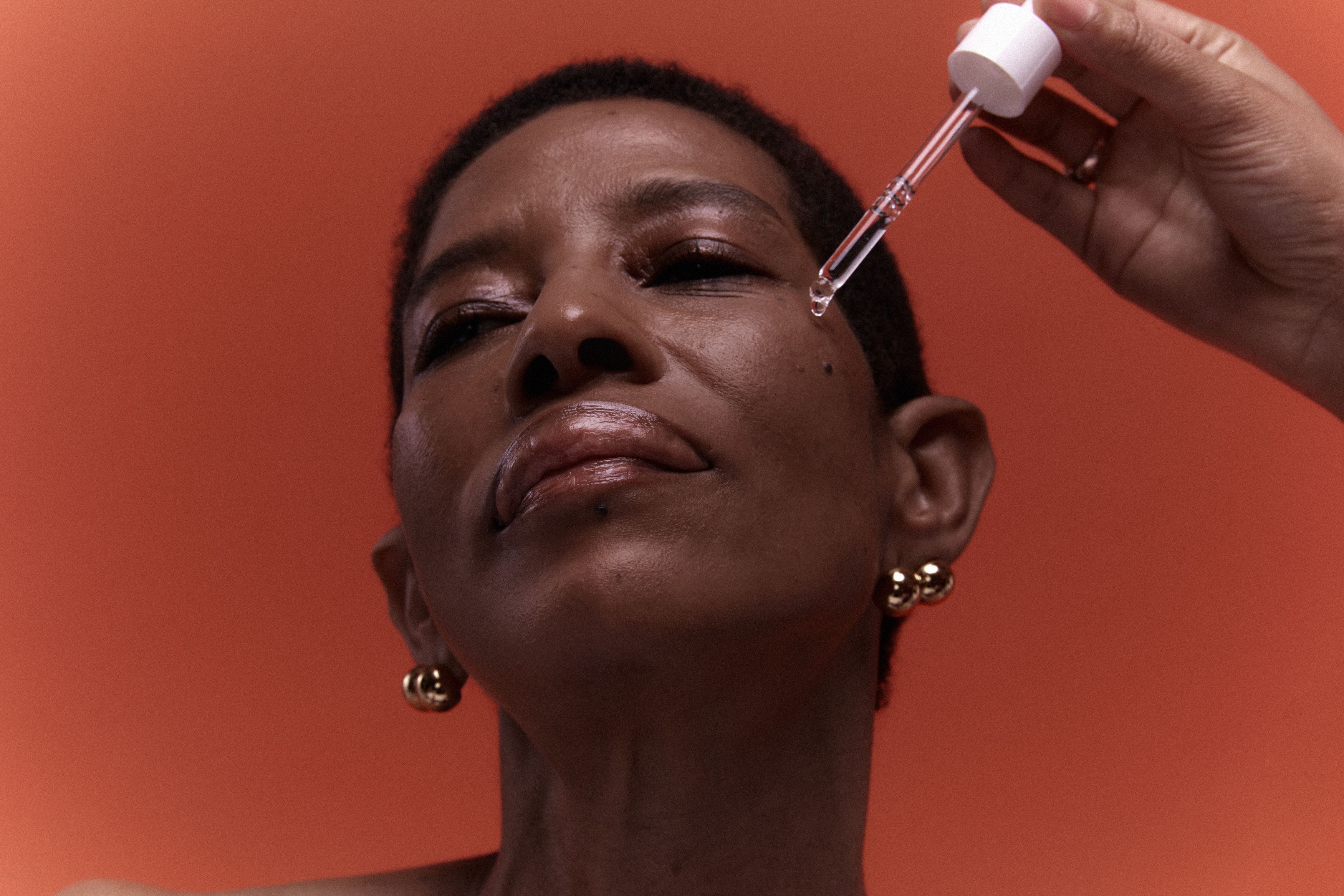
Vanessa Granda Save Story Save this story Save Story Save this story Not long ago, I got a good look at my face in a new light—as in, my new office in my new house, where the sun shines directly on me when I log into Zoom or Teams or Google Meet. I looked…tired. Moving will do that to you. Gaunt. Sunken. It was jarring.
My phone must have known what I was thinking because shortly thereafter I began seeing a whole lot of TikTok videos about something called Volufiline. The women in the videos were about my age (late 30s) and claimed it gave them a bouncy, plump, refreshed, younger look—similar to facial filler without the risk of overdoing it and with a way, way cheaper price tag.
After many years working in and adjacent to the beauty industry, I tend to take these sorts of claims with a big grain of salt and some healthy side-eye. But the Volufiline videos simply wouldn’t stop, and I was soon seeing the ingredient on real-life beauty shelves. Examples include The Ordinary’s Volufiline serum , Then I Met You’s Snail Mucin Eye Cream , and Medicube’s PDRN Pink Collagen Volume Multi Balm . (The latter two products boast 5% Volufiline, despite not mentioning the ingredient in their product names.) Satisfied users of Medicube’s pastel-pink stick were even calling it “filler in a bottle” on TikTok, which sounds great on paper but felt like a stretch.
Allure has written extensively on all things filler, including “filler fatigue,” which was driven by social media examples of overfilled faces. Not to mention, many people (understandably) have mixed feelings about injecting Juvéderm or Restylane and the rest of their ilk into their faces for a bit of a volume boost, or balk at the price for half a syringe of the hyaluronic acid fillers. Thus, a product that may replicate the results of injectable dermal filler without needles or a high price tag sounds pretty darn good.
But is there any truth to it? Before you go smearing a Volufiline stick or serum on your face in pursuit of plumper cheeks or fuller lips, here’s what you need to know about this very buzzy ingredient—and whether or not it’s worth adding to your routine.
Volufiline isn’t a miracle product. It’s an ingredient blend created by the French company Sederma, which is owned by cosmetic ingredient supplier Croda . Julian Sass , PhD, a cosmetic chemist in Montreal, explains that the ingredient comes from the root extract of the plant Anemarrhena asphodeloides , a botanical grown in Asia, which is then combined with hydrogenated polyisobutene (an oil)—and voila, you’ve got Volufiline!
Volufiline is said to boost volume in the face by increasing fat storage within the adipocytes, or fat cells. As Dr. Sass explains, that means it is purported to “increase the number and size of fat cells in the skin,” which sounds like a pretty big claim for a topical product to make.
If you’ve seen videos about Volufiline products on TikTok, you’ve probably noticed that they are most frequently applied to the undereye area or the lips. But it claims you can use it anywhere you feel hollow or deflated. If you believe what you see on your FYP, Volufiline could be exactly the boost you need to feel like yourself again. And when you’re seeing those ads again and again (because the algorithm noticed you’re interested), well, it’s hard not to be convinced that this could be the product that changes your relationship to your face, especially if you’re seeing the first signs of aging or losing a significant a…