
Photo: Courtesy of Dyson Save Story Save this story Save Story Save this story Open wide: the luxury playbook that transformed skincare and haircare is coming for our mouths.
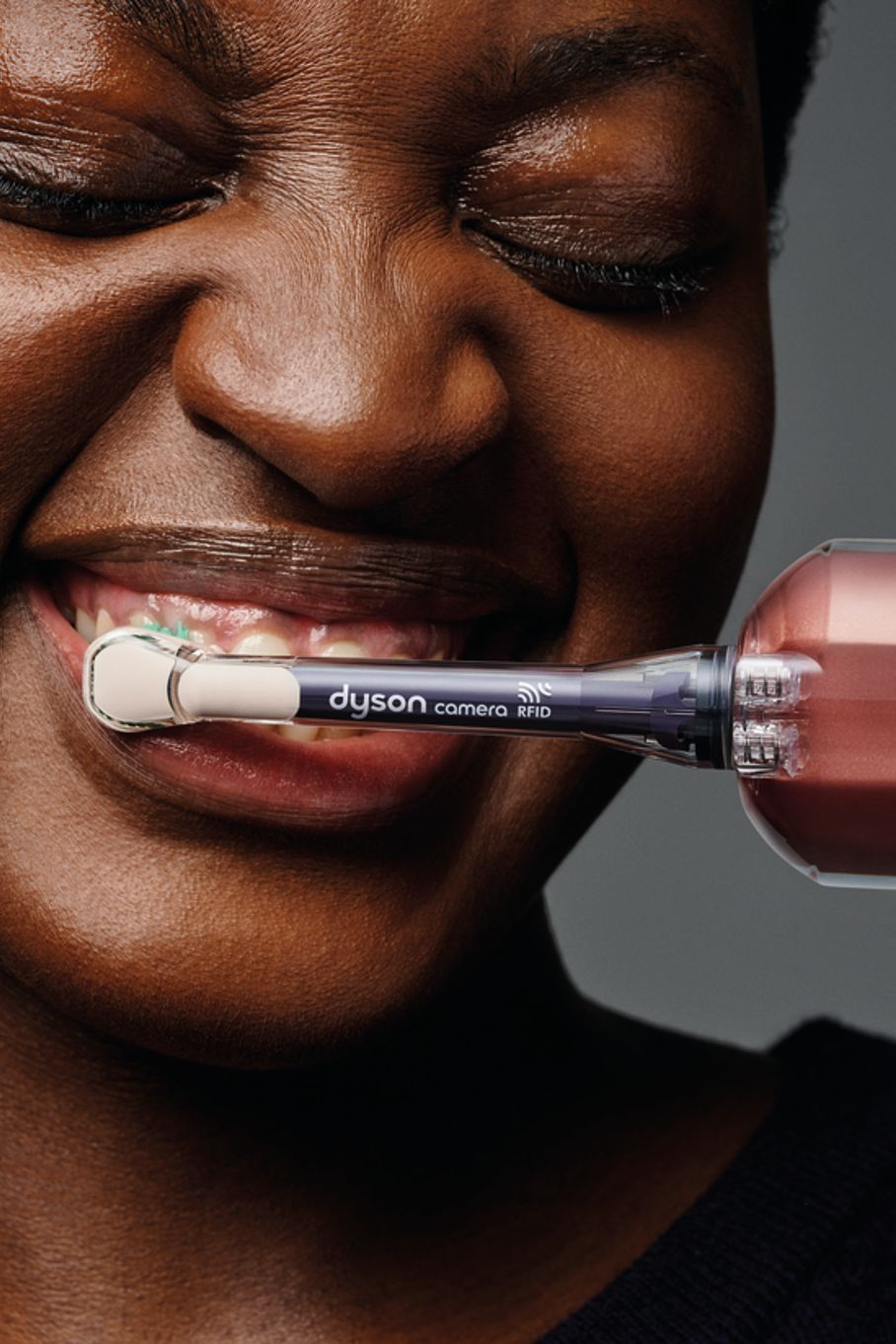
Dyson, the global brand known for its highly engineered everyday products, like blow dryers, fans and vacuums, is entering oral care with an electric toothbrush, called Dyson CameraJet. It’s the first toothbrush with a camera and a jet, combining brushing with technology designed to identify and clean the gaps between teeth, addressing a part of the routine consumers know matters, but often neglect. It’s the result of six years of research, development, and engineering, challenging every aspect of conventional oral care, says founder James Dyson. The Dyson CameraJet is also Wi-Fi connected at 2.4GHz, enabling users to watch as they brush through the MyDyson app.
The Dyson CameraJet, in Ceramic Pink and Ceramic Ultra Blue, lets users examine their teeth up close and water floss while brushing.
For decades, oral care has only touched the surface of what’s possible, Dyson engineer Niamh Turney says. “On the whole, we’re seeing people cutting steps and trying to cut corners in their oral care routine. The cycle has been that way for decades. It’s a cycle of paste, brush, rinse, floss everyday, twice a day, and it’s just obvious it’s not working.” According to the World Health Organization’s 2025 Global Oral Health Status Report , nearly 3.7 billion people are estimated to be affected by oral diseases globally, while oral health is linked to overall health, as well as our microbiome.
By building interdental cleaning into brushing, the device makes that often-skipped step harder to avoid. “With this, you’re forced to be more methodical and it’s actually quite enjoyable,” Dyson says. “It’s probably the first product we’ve done where it actually takes longer than what it’s replacing.” The bet is that consumers will trade speed for a more thorough clean.
Oral care is already big business. The global market is valued at approximately $37.8 billion in 2024 and is expected to reach $54.1 billion by 2030 . But beyond whitening, oral care has remained one of retail’s most clinical and commoditized categories, marketed through the unsexy language of cavities, plaque and gingivitis. A new generation of founders is borrowing from beauty and luxury to reposition toothpaste, mouthwash and breath care as aspirational products. Their language is sensorial, their packaging is designed to be displayed and their formulas emphasize hydration, ingredient literacy and the oral microbiome.
Dyson’s launch, meanwhile, points to a massive opportunity in premium oral care for brands: convincing consumers that one of their most regular, twice-daily habits deserves the same investment, discernment and pleasure as skincare.
New entries to the oral care category are taking a new approach, with an expanded focus on whole-mouth wellness, formulas and formats borrowed from beauty, and sensorial products designed to be displayed and enjoyed.
Köppen, the Ayurveda-inspired oral-care brand launched by siblings Parag and Priya Shah in spring 2026, reflects a broader shift beyond teeth with a whole-mouth system spanning everything from toothpaste and floss to oil pulling, mouth tape, lip balm and tongue scraping.
“The first thing we made was a copper tongue scraper because I couldn’t find one that felt like something I actually wanted to own,” says Parag Shah. “That product eventually reached tens of…