
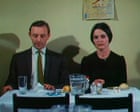
‘It was remarkable that they embraced this thing’ … Eric Allan and Anne Raitt in Mike Leigh’s debut feature film, Bleak Moments (1971). Photograph: Everett Collection Inc/Alamy View image in fullscreen ‘It was remarkable that they embraced this thing’ … Eric Allan and Anne Raitt in Mike Leigh’s debut feature film, Bleak Moments (1971). Photograph: Everett Collection Inc/Alamy Film ‘Not just Hollywood crap’: Mike Leigh on the East End communist who brought world cinema to the UK A new season celebrates Contemporary Films and its founder Charles Cooper, who bet on Britain taking to Ingmar Bergman, Yasujiro Ozu, Satyajit Ray – and a young Mike Leigh
Andrew Pulver Tue 1 Sep 2026 16.05 CEST Last modified on Tue 1 Sep 2026 20.37 CEST Share Prefer the Guardian on Google O ccasionally, vital pieces of the cultural jigsaw disappear without anyone really noticing. This, sadly, was the fate of Contemporary Films, the British film distributor that popularised sophisticated, grownup international cinema – foreign language mostly – in the UK, and heralded the arrival of the auteur generation with directors such as Ingmar Bergman , Satyajit Ray, Andrzej Wajda and Yasujiro Ozu.
Contemporary, and its founder Charles Cooper, weren’t the only game in town – Kenneth Rive’s Gala was a fellow traveller – but Contemporary got there first, setting up shop in 1951, first with short films for the then popular film society sector, and moving into features with the 1952 Japanese film Children of Hiroshima . Its marketplace clout faded rapidly in the early 1990s, when it was a victim of changing industry practices. But amazingly, the company is still with us – and is planning a 75th anniversary series of screenings to showcase its history.
View image in fullscreen Charles Cooper. Photograph: Contemporary Films Such is Contemporary’s lustre that, along with screenings of films such as Miloš Forman’s A Blonde in Love, Bergman’s Wild Strawberries and Jack Hazan’s David Hockney documentary A Bigger Splash, the great and good are turning out in support, led by Mike Leigh , whose feature film directing debut, Bleak Moments, was picked up by Contemporary in 1971. “It was a great honour,” Leigh says. “One was used to seeing ‘Contemporary Films’ on all the movies one saw that weren’t just Hollywood crap.”
Bleak Moments, a studiedly funny and weird film based on Leigh’s own stage play, is about a woman living an isolated life with a sister with a learning disability and a boring job. It was financed by Albert Finney, still riding high on his 1960s acting successes. As a homegrown, off-kilter feature, it was a slightly unusual item for Contemporary to pick up. “We were fresh on the block and innocent,” says Leigh, “and you take everything for granted in some way. But actually, when you think about it, they were pretty remarkable and they embraced this thing.”
Now a Palme d’Or and Golden Lion winner, Leigh undoubtedly understands the impact the company had on his own development. But it is its effect on the wider culture, the openness and cosmopolitanism that Contemporary helped to foster, that is arguably its most important contribution. “I grew up in Manchester,” says Leigh, “and I saw movies all the time, but I never saw a film that wasn’t in English. I saw only Hollywood and British movies. So when I came to London, world cinema suddenly presented itself. I have recollections of seeing Russian films, Italian neorealism, you name it. It was all going on, and Contempora…