
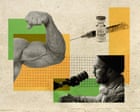
‘Low testosterone is being blamed in the rightwing manosphere for a crisis of masculinity,’ writes Donna Lu. ‘But the fixation on T-maxxing ignores hard evidence.’ Composite: The Guardian/Getty Images View image in fullscreen ‘Low testosterone is being blamed in the rightwing manosphere for a crisis of masculinity,’ writes Donna Lu. ‘But the fixation on T-maxxing ignores hard evidence.’ Composite: The Guardian/Getty Images Antiviral Men's health Forget T-maxxing – the manosphere’s obsession with testosterone is just fear-maxxing Donna Lu Testosterone replacement therapy comes with serious and potentially irreversible health risks including infertility and early heart disease
A re you tired? Feeling flat and irritable? Finding it difficult to concentrate? Maybe you’re experiencing the seemingly ubiquitous symptoms of modern life . Or, if you’re a man, you may have been told by countless uncredentialed online influencers that you’re probably suffering from “low T”.
For decades, testosterone has been marketed to men as a means to maximise virility. But in recent years, social media has fuelled the “T-maxxing” trend, in which men are encouraged to maximise their testosterone levels through either natural or artificial means.
Low testosterone is being blamed in the rightwing manosphere for a crisis of masculinity ; global search interest in the term is up 60% from last year .
Read more Popular podcasters such as Joe Rogan and Andrew Huberman openly talk about taking testosterone, as has the 72-year-old Robert F Kennedy Jr, who has said he uses testosterone replacement therapy as part of an “anti-ageing protocol”.
Elsewhere in the Trump administration, the US defence secretary, Pete Hegseth, announced in July that soldiers 30 and over would be tested annually to ensure they have the “right testosterone levels”.
Social media is awash with testimonies from men on testosterone replacement therapy who say they have lost weight and regained energy, motivation and libido. Prescriptions for testosterone in the UK and US have risen sharply in recent years.
But the fixation on T-maxxing ignores hard evidence: very few men actually have clinically low levels of the sex hormone, and taking exogenous testosterone – through injections or gels – comes with serious and potentially irreversible health risks, especially when treatment is unwarranted.
Testosterone is a steroid hormone we all produce, but is naturally found at higher levels in men.
Testosterone levels fluctuate throughout the lifetime, says Prof Ada Cheung, an endocrinologist at the University of Melbourne.
Population-based studies show that testosterone rises rapidly during male puberty and that over time “it does tend to decline a bit with age”, she says. “That decline with age we think is largely attributed to the accumulation of chronic health conditions as we get older” – conditions such as obesity, diabetes, high cholesterol and blood pressure. “But it doesn’t mean that every older man needs testosterone [treatment], because that’s not the case at all.”
Testosterone levels also vary through the day and in response to physical stressors such as illness and poor sleep. “It’s always low in the afternoon and highest first thing in the morning,” Cheung says. “Testosterone naturally varies when we eat … and if we’re sick in any way.”
Research suggests that average testosterone levels in men have declined over the last five decades , though they remain within normal reference ra…