
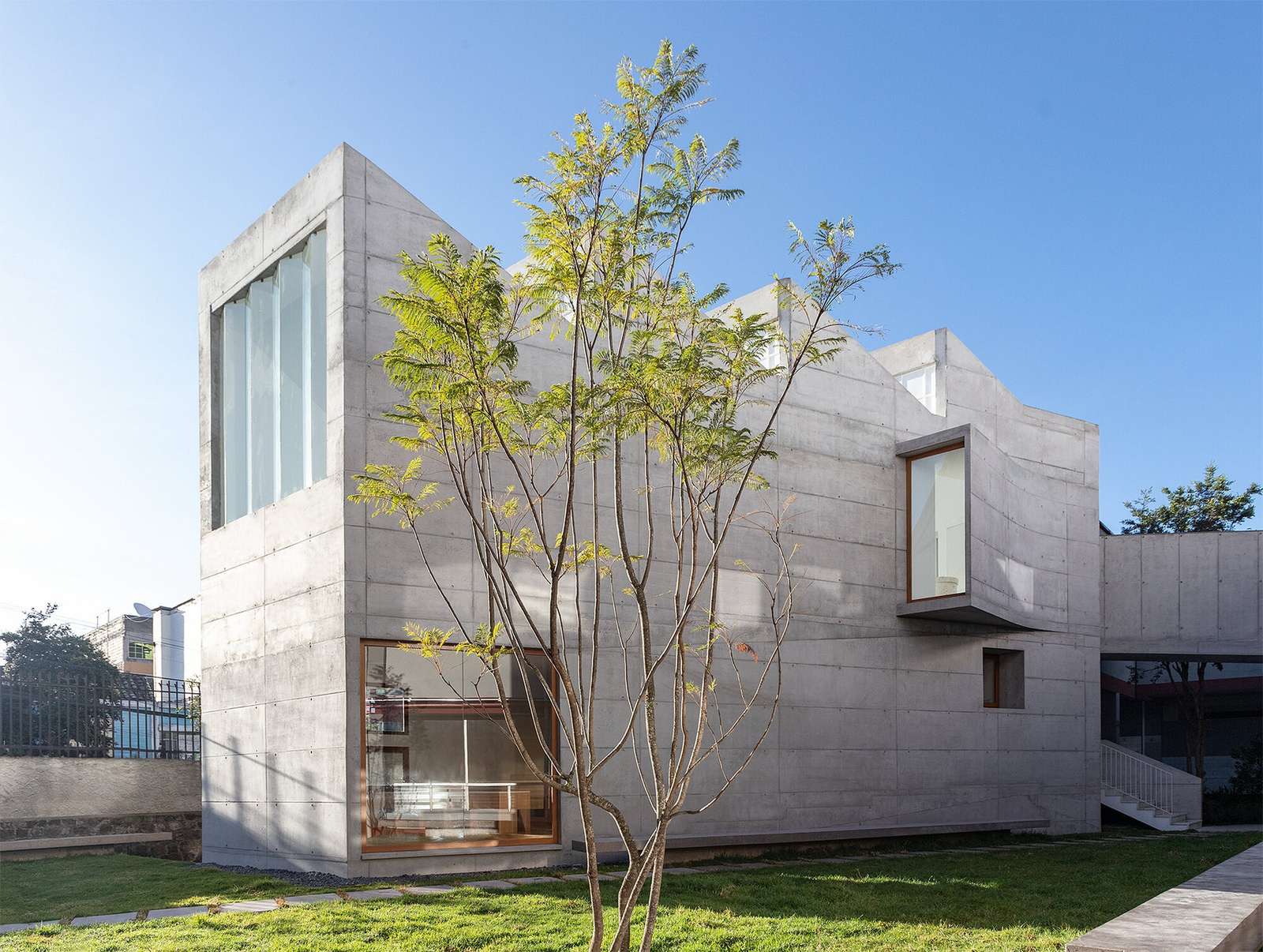
On June 10, 2026, the new Arts Hall Annex reinterprets the relationship between mass and complex urban context. The mass formation and dialogue of the complex context reveal the architectural value of the new Arts Hall Annex in its ability to formulate a precise structural response to a highly complex and crowded urban environment. The geographical position of the building—between a gymnasium, a massive retaining wall, a block of classrooms, and an existing church—poses a spatial challenge that requires careful solutions balancing structural adaptation and functional independence. The design abandons formal extravagance, allowing the exterior to be a sincere and direct expression of the internal spaces and the structural logic governing them, enhancing visual harmony with its surroundings without creating an architectural break with adjacent buildings.
The movement of users within the annex transforms into a living scenographic experience beginning at the moment of crossing and transitioning from traditional educational spaces to specialized art halls. The design directs internal circulation paths to connect seamlessly between the graphic design and painting halls, the office, and storage areas, while the movement of natural light and shadows falling through openings plays a crucial role in shaping the psychological and material effect on the user, as the building's geometric angles interact with the sun's path to provide changing light that suits the nature of artistic activities. This vital interaction extends outward, where green space dedicated to recreation and learning has been integrated, serving as an environmental outlet that connects the human experience with the surrounding natural environment.
Spatial balance in the project is achieved by relocating the core of vertical and horizontal circulation—the embodied stairs, bridge, and elevator—next to the existing classroom block, a smart orientation that liberates the main volume of the building and fully dedicates it to classroom spaces. Meanwhile, two inclined and stretched concrete slabs later serve as a sophisticated structural solution that meets the spatial requirements associated with visibility and openness within classrooms, simultaneously addressing the challenges of the trapezoidal plan. This exposed concrete system not only resolves engineering complexities but also extends its functional impact to reduce long-term maintenance costs as a sustainable and straightforward solution.